



The landscape of American higher education has long been dominated by traditional liberal arts colleges and research universities, institutions that prioritize theoretical knowledge and abstract thinking. Yet in the heart of central Pennsylvania, a different model has been quietly revolutionizing how students prepare for their careers. Pennsylvania College of Technology, nestled in Williamsport, represents a fundamental reimagining of what college can be—a place where getting your hands dirty isn’t just accepted, it’s required.
A History Rooted in Practical Purpose
Pennsylvania College of Technology didn’t emerge from the typical mold of American colleges. Founded in 1914 as the Williamsport Technical Institute, the institution began with a straightforward mission: prepare workers for the industrial economy that was rapidly transforming Pennsylvania. The early twentieth century demanded skilled tradespeople, technicians, and specialized workers who could operate increasingly complex machinery and systems.
The college evolved through multiple iterations, becoming the Williamsport Area Community College in 1965 before finally achieving its current status as Pennsylvania College of Technology in 1989. That transformation marked more than a name change—it represented the institution’s commitment to offering bachelor’s degrees alongside associate degrees and certificates, expanding its reach while maintaining its core identity as an applied technology institution.
What makes this history particularly relevant today is how the college has remained true to its founding principles while adapting to contemporary needs. The same practical, hands-on philosophy that prepared workers for Pennsylvania’s manufacturing boom now prepares students for careers in advanced manufacturing, healthcare technology, computer science, and emerging fields that didn’t exist a generation ago.
The Penn College Difference
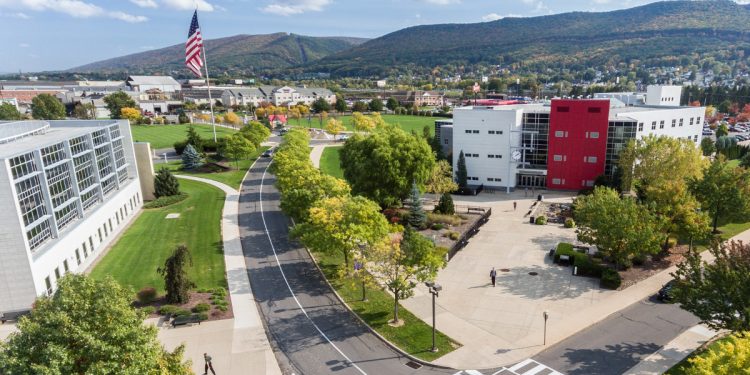
Walk onto Penn College’s campus, and the difference from traditional universities becomes immediately apparent. Instead of lecture halls filled with hundreds of students scribbling notes, you’ll find specialized laboratories, workshops, and simulation centers where students actively engage with their chosen fields. The automotive technology program features working bays where students diagnose and repair actual vehicles. The nursing simulation center replicates hospital environments with remarkable fidelity, complete with programmable mannequins that can simulate virtually any medical emergency.
This commitment to applied learning extends across every program the college offers. Architecture students don’t just study building codes—they design structures and work with construction materials. Aviation technology students maintain and troubleshoot actual aircraft. Culinary students operate a working restaurant open to the public. The philosophy is simple but powerful: the best way to learn is by doing.
The college’s connection to Pennsylvania State University adds another dimension to this model. As an affiliate of Penn State, Pennsylvania College of Technology combines the resources and reputation of a major research university with the focused, practical approach of a technical college. Students receive Penn State degrees while experiencing an educational model that emphasizes immediate applicability and career readiness.
Programs That Reflect Real-World Demands
Pennsylvania College of Technology offers more than 100 majors across a diverse range of fields, but all share a common characteristic: they’re designed with clear career pathways in mind. This isn’t education for education’s sake—it’s preparation for specific professions and industries.
The School of Industrial, Computing and Engineering Technologies stands as one of the college’s flagship divisions. Here, students can pursue degrees in everything from robotics and automation engineering to cybersecurity to plastics and polymer engineering technology. These programs respond directly to regional and national workforce needs, producing graduates who step into jobs that might otherwise go unfilled.
Healthcare programs at Penn College have grown substantially in recent years, reflecting the increasing demand for skilled healthcare workers. The nursing program produces registered nurses through a rigorous curriculum that combines classroom instruction with extensive clinical experience. Other health-related programs include physician assistant studies, dental hygiene, occupational therapy assistant studies, and paramedicine. Each program emphasizes the practical skills and clinical judgment that healthcare professionals need from day one.
The college’s business and hospitality programs take a similarly applied approach. Restaurant management students don’t just learn about hospitality theory—they work in Le Jeune Chef Restaurant, a fine dining establishment on campus that serves the public and provides students with real operational experience. The baking and pastry arts program operates a retail bakery. These aren’t simulations or role-playing exercises; they’re actual businesses that must meet customer expectations while serving as learning laboratories.
Technology Integration and Modern Facilities
Pennsylvania College of Technology has invested heavily in maintaining state-of-the-art facilities that mirror professional environments. The Advanced Automotive Technology Center features equipment identical to what students will encounter at dealerships and repair facilities. The precision machining laboratories house computer numerical control (CNC) machines that represent current industry standards. The welding workshops contain the latest welding technologies, from traditional stick welding to advanced orbital welding systems.
This commitment to current technology extends beyond equipment. The college regularly updates curricula to reflect evolving industry practices and emerging technologies. When additive manufacturing (3D printing) began transforming manufacturing, Penn College integrated it across multiple programs. When cybersecurity became a critical concern, the college expanded its information technology offerings to address this need.
The Lumley Aviation Center deserves special mention as one of the most impressive facilities on campus. This facility supports the college’s aviation programs with dedicated spaces for airframe and powerplant mechanics, avionics technology, and aviation management. Students work on actual aircraft, gaining the hands-on experience required for Federal Aviation Administration certification.
The Faculty: Practitioners as Educators
One of Pennsylvania College of Technology’s greatest strengths lies in its faculty composition. Many instructors come to teaching after substantial careers in their respective fields. The welding instructor might have spent twenty years in structural steel fabrication. The computer science professor might have worked as a software developer for major technology companies. The nursing instructors bring years of clinical experience to their teaching.
This practitioner-educator model provides students with more than textbook knowledge. Faculty members share insights gained from real professional challenges, industry trends they’ve witnessed firsthand, and professional networks they’ve built over years in their fields. They can answer the question every student wants to know: “What’s it really like?”
The relatively small class sizes at Penn College facilitate close student-faculty relationships. Unlike large universities where students might struggle to get individual attention, Penn College students often develop mentoring relationships with their instructors. These connections frequently extend beyond graduation, as faculty members help alumni navigate career transitions or advancement opportunities.
Industry Partnerships and Career Outcomes
Pennsylvania College of Technology has cultivated extensive partnerships with companies and organizations across numerous industries. These relationships serve multiple purposes: they ensure curricula remain relevant to employer needs, they provide internship and cooperative education opportunities for students, and they create direct pipelines for graduate employment.
Manufacturing companies throughout Pennsylvania and beyond regularly recruit Penn College graduates. The college’s plastics and polymer program, for instance, works closely with companies in this specialized field, ensuring students learn techniques and processes currently used in industry. Healthcare facilities partner with the college for clinical placements and often hire graduates directly into positions.
The college’s career outcomes speak to the effectiveness of this approach. Graduates consistently report high employment rates, with many securing positions before graduation. Starting salaries for Penn College graduates often exceed national averages for similar programs, reflecting the value employers place on the practical skills these students bring to their positions.
Campus Life and Student Experience
While Pennsylvania College of Technology’s focus on career preparation is unmistakable, the college also provides a comprehensive college experience. The campus in Williamsport offers residence halls, dining facilities, recreational opportunities, and student organizations. NCAA Division III athletics give students opportunities to compete in sports including baseball, basketball, cross country, golf, soccer, tennis, and volleyball.
The college’s student body reflects diverse backgrounds and experiences. Traditional-age students coming directly from high school mix with adults returning to education for career changes or advancement. Military veterans find Penn College’s structured, mission-oriented approach particularly appealing. This diversity enriches the campus environment, bringing together perspectives from different generations and life experiences.
Student organizations at Penn College often connect directly to academic programs. The Society of Automotive Engineers student chapter participates in national competitions. The American Institute of Architecture Students chapter provides networking and professional development opportunities. Skills USA chapters allow students in various trades and technical fields to compete regionally and nationally, testing their abilities against peers from other institutions.
Addressing the Skills Gap
Pennsylvania College of Technology exists at the intersection of several crucial trends in American education and employment. The much-discussed “skills gap”—the disconnect between the skills employers need and the skills workers possess—presents a significant challenge to economic growth and individual prosperity. Traditional four-year degrees, while valuable, don’t always prepare graduates for the specific technical competencies many employers require.
Penn College addresses this gap directly through its applied technology focus. When manufacturers struggle to find qualified machinists, Penn College graduates enter the workforce with thousands of hours of hands-on machine time. When healthcare facilities need nurses who can function effectively from day one, Penn College graduates arrive with extensive clinical experience. This practical preparation reduces the training time employers must invest and increases the immediate productivity of new hires.
The college’s approach also provides an alternative pathway for students who might not thrive in traditional academic environments. Some students learn best by doing rather than by reading or listening to lectures. For these students, Penn College’s hands-on methodology can be transformative, turning struggling learners into confident, competent professionals.
Innovation in Applied Education
Pennsylvania College of Technology continues to innovate within its core mission of applied technology education. The college has embraced online and hybrid learning formats for appropriate courses, expanding access while maintaining the hands-on components essential to its programs. This flexibility became particularly important during the COVID-19 pandemic, when the college demonstrated remarkable adaptability in maintaining educational quality despite unprecedented challenges.
The college has also expanded its focus on entrepreneurship and innovation. The Center for Innovation and Entrepreneurship provides resources for students interested in starting their own businesses, recognizing that many graduates will become entrepreneurs or work in startup environments. This emphasis complements the college’s traditional strength in preparing employees for established companies.
Sustainability and green technology represent another area of growth. Programs in sustainable design, renewable energy, and environmental science reflect both student interest and industry demand for professionals who can address environmental challenges while maintaining economic viability.
Challenges and Future Directions
Like all educational institutions, Pennsylvania College of Technology faces challenges. The rising cost of higher education affects Penn College as it does universities nationwide. While the college’s career-focused approach helps justify educational investment through strong employment outcomes, affordability remains a concern for many students and families.
Keeping pace with technological change requires constant investment. The equipment and facilities that make Penn College’s hands-on approach possible don’t come cheap, and they require regular updating to remain current with industry standards. The college must continually balance maintaining existing programs with investing in emerging fields.
Demographic shifts also present challenges. Pennsylvania’s population is aging, and the traditional college-age population is declining in many regions. Penn College must attract students from beyond its immediate region and appeal to non-traditional students seeking career changes or advancement.
The Value Proposition
At its core, Pennsylvania College of Technology offers a value proposition that resonates powerfully in contemporary America: practical education leading to meaningful careers. In an era when many graduates struggle with underemployment and student debt, Penn College provides a focused alternative.
The college doesn’t promise that every graduate will change the world or discover a cure for cancer. It promises something arguably more valuable to many students: the skills, knowledge, and credentials needed to build a solid career in a field they’ve chosen. That might mean becoming an automotive technician earning a comfortable living by solving complex mechanical problems. It might mean becoming a registered nurse providing critical care to patients. It might mean becoming a chef, a welder, an architect, a computer network specialist, or any of dozens of other careers.
This practical focus doesn’t mean Penn College ignores broader educational goals. Critical thinking, communication, problem-solving, and adaptability are emphasized across all programs because these skills prove essential in any career. But these broader competencies are developed within the context of specific fields, making them more concrete and immediately applicable for students.
Conclusion: A Model for Twenty-First Century Education
Pennsylvania College of Technology represents one answer to fundamental questions about higher education’s purpose and structure. As traditional college models face increasing scrutiny over costs, outcomes, and relevance, Penn College demonstrates that alternatives exist. Applied technology education, delivered through hands-on learning in state-of-the-art facilities by faculty with industry experience, produces graduates who meet clear workforce needs.
The college’s approach won’t suit every student or every educational goal. Students seeking primarily theoretical or research-focused education will find better fits elsewhere. But for students who want to develop marketable skills, who learn best through practical application, and who value clear career pathways, Pennsylvania College of Technology offers an educational model worth serious consideration.
As the American economy continues evolving, the need for workers with specialized technical skills will only grow. Advanced manufacturing, healthcare, information technology, and countless other fields require professionals with hands-on competency and practical problem-solving abilities. Pennsylvania College of Technology has been developing such professionals for more than a century, and its model of applied technology education appears more relevant today than ever before.
The college’s success ultimately rests on a simple insight: education becomes most powerful when it connects learning to purpose, when it shows students not just what to think but what to do with that thinking. In workshops and laboratories across its Williamsport campus, Pennsylvania College of Technology continues demonstrating that principle every day, preparing the skilled workforce Pennsylvania and America need for the challenges ahead.