



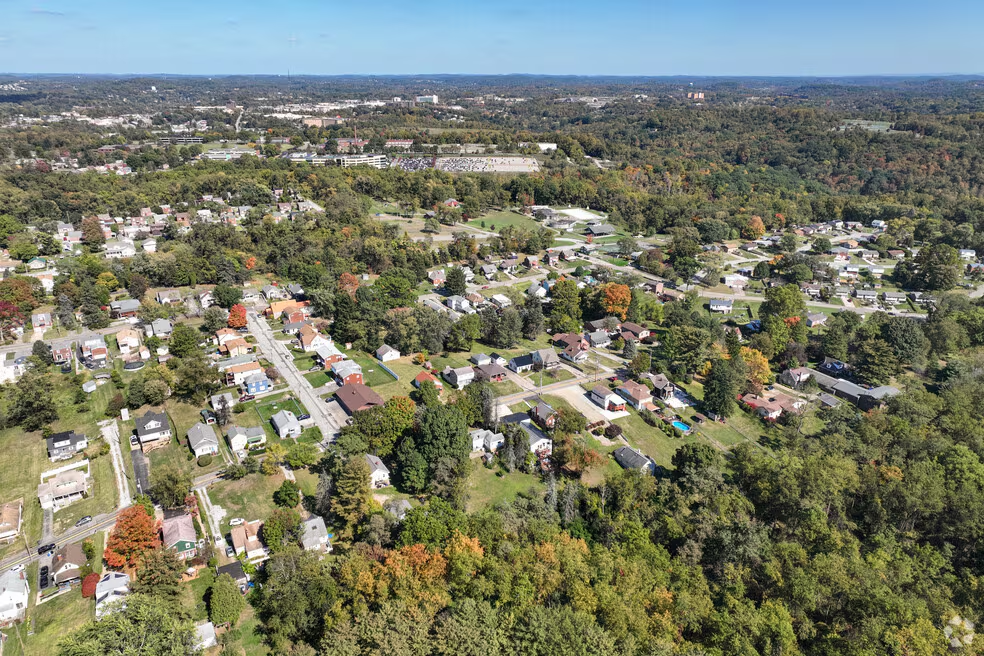
Most people speed through Monroeville, PA on Interstate 376 without a second thought, catching only a blur of highway exits and the silhouette of a familiar mall against the Allegheny County skyline. That’s their loss. Because Monroeville — sitting about 13 miles east of downtown Pittsburgh — is one of those rare American suburbs that has quietly accumulated a genuinely fascinating identity: part industrial crossroads, part zombie pilgrimage site, part affordable family haven, and part commercial powerhouse. Once you stop and actually look, the place earns your full attention.
A Town Built on Crossroads — Literally
The Municipality of Monroeville is considered by many to be the “Crossroads of Western Pennsylvania,” with Interstate 376, Interstate 76 (the Pennsylvania Turnpike), and U.S. Route 22 all converging here. That’s not just a marketing tagline — it’s a geographical fact that has defined Monroeville’s entire character from the very beginning.
By the latter part of the 1700s, Pittsburgh had become a bustling pioneer village, but the hills to the east remained sparsely populated. In 1807, the Northern Turnpike was completed from Philadelphia to Pittsburgh, and Monroeville — at its convenient location 13 miles out of Pittsburgh — became the first stagecoach stop heading east on the new road. By 1810, the village could boast of two blacksmiths, two stores, and an inn.
The town’s very name traces back to a local landowner. When a local farmer named Joel Monroe began selling off lots along the road, he laid down the core of the modern community that bears his name. That modest act of commerce — a farmer selling parcels along a new turnpike — would eventually give rise to a municipality of nearly 29,000 people and one of the most commercially active corridors in the entire Pittsburgh metro area.
The township model evolved over decades. In 1849, the village became part of the newly-formed Patton Township. It wasn’t until the post-World War II suburban boom that Monroeville truly exploded into the community recognizable today — tract homes, shopping strips, schools, and eventually one of the region’s defining retail landmarks.
What’s remarkable is that this history hasn’t been buried. The Monroeville Historical Society maintains several sites that provide visitors with a glimpse of simpler times and a rich history of the area, including The Old Stone Church, The McGinley House, and The McCully Log House. These aren’t dusty afterthoughts. They’re genuine windows into life in western Pennsylvania two centuries ago, sitting quietly amid modern subdivisions and chain restaurants.
The Mall That Changed Everything — And Then Changed Again
If you’re going to talk about Monroeville, PA, you have to talk about the mall. Monroeville Mall opened in 1969 and quickly became a regional institution. Monroeville isn’t just Southwestern Pennsylvania’s second-largest retail center — it also offers a breadth of career and educational opportunities.
But the mall’s cultural significance goes far deeper than retail square footage. In 1978, Pittsburgh director George A. Romero chose Monroeville Mall as the primary filming location for his landmark horror film Dawn of the Dead. George Romero chose the Monroeville Mall for his film setting because it represented a “cathedral of consumerism.” That sardonic choice — using a shopping mall as the last refuge of humanity in a zombie apocalypse — turned Monroeville into a genuine piece of American cinematic history.
A bust of Romero was installed in Monroeville Mall, signaling fans’ redesignation of the space as a “mecca” for paying tribute to his films even as it undergoes changes. The mall’s own footbridge became iconic. The Monroeville Mall footbridge holds a special place in the hearts of George A. Romero fans, appearing at several points in Romero’s most commercially successful zombie film as a set piece for lurching zombies.
That footbridge was eventually donated to the Heinz History Center — conveyed by a procession of Romero fans dressed as zombies to the History Center’s permanent collection in July 2015. It’s now part of Pittsburgh’s cultural heritage collection, a testament to the genuine, grassroots love that surrounds Romero’s legacy in this region.
Like many American malls, Monroeville Mall has faced the familiar challenges of the retail apocalypse in recent decades — the irony of which, given its Dawn of the Dead history, is hard to miss. Visitors today note fewer stores and more empty anchor spaces. Yet it persists, and in many ways the Living Dead Museum has become its most interesting tenant.
The Living Dead Museum — Monroeville’s Most Unique Attraction
Horror fans have been making pilgrimages to Monroeville, PA for decades, but the Living Dead Museum formalizes that devotion into something genuinely worth your time and the modest admission price.
The Living Dead Museum is a celebration of zombies in pop culture, located in the world-famous Monroeville Mall — the original filming location of George A. Romero’s Dawn of the Dead — and the themed attraction takes fans through a visual history of zombies in cinema and pop culture.
The museum began in 2008 as a small shrine in Kevin Kriess’s Monroeville Mall toy store. Kevin wanted to pay tribute to Pittsburgh director George Romero, whose films transformed the Mall — and nearby Evans City — into the birthplace of the modern-day flesh-eating zombie. Over time, the shrine outgrew its host and became a proper museum, moving to Evans City for a period before returning triumphantly to its natural home.
One room is devoted exclusively to the Mall — it exhibits part of an escalator ridden by zombies — while another is devoted to Romero films that didn’t have “Dead” in their titles. Its artifacts include Sylvia Grantham’s cake-topper head from Creepshow and a door from The Crazies covered with cast members’ bloody handprints.
The most impressive set-up includes the elevator from Dawn of the Dead — the actual elevator from the movie, saved from the mall’s J.C. Penney’s during their remodeling. This is not replica content. This is screen-used, historically significant film equipment sitting in the very building where it was filmed. That’s a remarkable curatorial achievement for a museum of this scale.
The museum is not a haunted house. As Kevin Kriess himself explains, “It’s not supposed to scare you. It’s a movie history museum, not a haunted attraction.” That distinction matters. The Living Dead Museum is thoughtful, well-organized, and genuinely educational — a legitimate exploration of how Pittsburgh’s filmmaking culture gave birth to one of the most durable genres in popular entertainment.
Celebrity handprints are on the museum’s wonderfully titled “Maul of Fame,” including George Romero’s, along with movie props, production photographs, and notes.
For any visitor to Monroeville, PA with even a passing interest in film history, this is mandatory.
Living in Monroeville, PA — The Real Numbers
Beyond the zombie lore and the shopping corridors, Monroeville is fundamentally a place where people build lives. And the data on what that life looks like is genuinely encouraging.
Monroeville is a suburb of Pittsburgh with a population of 28,295, and is one of the best places to live in Pennsylvania. Living in Monroeville offers residents a dense suburban feel, and most residents own their homes. In Monroeville there are a lot of bars, restaurants, coffee shops, and parks.
Housing affordability is a major draw. The median price of single-family homes is $240,000 — just over half the national median of around $420,000. Townhouses typically sell for about $238,000, and with no shortage of listings, most properties tend to sell after more than two months on the market. For buyers coming from larger metro areas on the East Coast, these numbers are striking. You can own a full-sized home in a well-serviced community, 13 miles from a major American city, for well under a quarter of a million dollars.
Renters fare similarly well. As of May 2025, the average apartment rent in Monroeville, PA is $875 for a studio, $1,155 for one bedroom, $1,345 for two bedrooms, and $1,590 for three bedrooms.
The Gateway School District serves the community and earns an overall grade of B-plus from Niche. It includes four elementary schools, a middle school, and a high school, all of which receive a B or higher.
The median age in Monroeville is 43.8, and the average individual income is $45,249. The community tends to attract young professionals and retirees in roughly equal measure — a demographic balance that keeps both the energy and the pace of life comfortable.
Higher educational opportunities are accessible via the Community College of Allegheny County’s Boyce Campus and Indiana University of Pennsylvania. This puts post-secondary education within easy reach for residents of all ages without the expense or commute of traveling into Pittsburgh proper.
Parks, Green Space, and Outdoor Life
One persistent misconception about Monroeville, PA is that it’s just big-box retail and highway ramps all the way down. The reality is considerably greener.
Monroeville offers numerous parks and trails for hiking, biking, and picnicking. The community is surrounded by parks — Boyce Park to the north, Kelvington Park and Ferndale Park within the municipality’s boundaries, and the Monroeville Community Park West, which hosts the Tall Trees Amphitheater.
Many annual events take place in the neighborhood parks, particularly at the Tall Trees Amphitheater within Monroeville Park West. The park sees many outdoor concerts, including the annual Monroeville Jazz Festival, celebrating this musical style with free live performances from popular performers.
The seasonal variety in Monroeville makes it genuinely enjoyable year-round for outdoor enthusiasts. Spring is mild and comfortable, perfect for outdoor activities. Summers can be hot and humid, but the local parks and pools provide relief. Fall is a beautiful season with colorful foliage, ideal for hiking and photography. Winters can be cold and snowy, but indoor attractions like the Monroeville Mall and local museums remain open.
Proximity to Boyce Park is a particular asset — the park offers skiing and snow tubing in winter, disc golf, trails, and picnic facilities the rest of the year. It’s the kind of resource that would anchor a real estate listing in almost any other market, but in Monroeville it’s simply part of the expected amenity set.
Healthcare, Commerce, and Infrastructure
Located just 12 miles east of Pittsburgh, Pennsylvania, the City of Monroeville is home to welcoming residential communities, as well as a variety of large and small businesses, bustling shopping districts, world-class health care providers, and extraordinary schools.
The healthcare infrastructure in Monroeville deserves special attention. Forbes Hospital, part of the Allegheny Health Network, is one of the region’s significant medical facilities and sits within the municipality. For families with elderly members or medical needs, having hospital-level care nearby — without driving into Pittsburgh’s congested urban core — is a concrete quality-of-life advantage.
The commercial corridor along U.S. Route 22 is extensive. Highway 22 is lined with restaurants, services, retailers, and local businesses. From national chains to independent restaurants representing cuisines from across the globe, the dining and retail options available to Monroeville residents are genuinely comparable to what you’d find in a much larger city.
Monroeville residents benefit from a reasonable cost of living, only slightly more expensive than that of the city of Pittsburgh. Residents who ride the Port Authority of Allegheny County buses pay $3.75 to get to downtown Pittsburgh. For commuters, that’s a meaningful saving versus parking costs in the city.
Monroeville vs. Nearby Pittsburgh Suburbs — A Comparison
For prospective residents weighing their options in the Pittsburgh metro area, context matters. Here’s how Monroeville, PA stacks up against comparable suburbs:
| Feature | Monroeville, PA | Murrysville, PA | Penn Hills, PA | Plum Borough, PA |
|---|---|---|---|---|
| Distance from Pittsburgh | ~13 miles east | ~20 miles east | ~8 miles east | ~15 miles east |
| Median Home Price | ~$240,000 | ~$310,000 | ~$155,000 | ~$220,000 |
| School District | Gateway (B+) | Franklin Regional (A) | Penn Hills (C) | Plum Borough (B) |
| Retail/Commercial Access | Excellent (2nd largest in SW PA) | Moderate | Moderate | Limited |
| Public Transit | Yes (Port Authority) | Limited | Yes (Port Authority) | Limited |
| Unique Cultural Attraction | Living Dead Museum, Romero heritage | Rural character | Limited | Limited |
| Parks & Outdoor Space | Strong (Boyce Park adjacent) | Strong | Moderate | Strong |
| Interstate Access | Excellent (I-376, I-76, US-22) | Good (US-22) | Good (I-376) | Good (PA-286) |
| Commuter-Friendliness | High | Moderate | High | Moderate |
| Avg. 1BR Apartment Rent | ~$1,155/month | ~$1,300/month | ~$950/month | ~$1,100/month |
Monroeville consistently occupies a middle position — not the cheapest option, but significantly below the cost of some of the western suburbs like Upper St. Clair or Mount Lebanon, while offering considerably better commercial access and infrastructure than smaller, more rural communities to the east.
The Gateway School District’s B+ rating is the honest asterisk here. Families for whom schools are the single deciding factor may find Franklin Regional in Murrysville or the North Allegheny District to the north more compelling — but they’ll pay for it in home prices. Monroeville’s value proposition is solid for a family that wants good (though not elite) schools, immediate access to retail and healthcare, and strong highway connectivity at a price point that leaves room in the household budget.
The Cultural Calendar and Community Identity
Monroeville, PA isn’t without its live events scene, though it’s fair to acknowledge that nightlife options are limited compared to Pittsburgh proper. What the community offers instead is a steady rhythm of local events that reflect its identity as a family-oriented, diverse suburb.
The Monroeville Convention Center hosts many events throughout the year, including conferences, performances, and festivals. The Pittsburgh Folk Festival celebrates multicultural music, dance, food, and crafts. The annual Celebrate Monroeville expo showcases local businesses as it entertains with music and activities, pulling in thousands of attendees.
The annual Monroeville Jazz Festival in Monroeville Park West is a particular standout — a free, outdoor event that draws significant attendance each summer and demonstrates the community’s genuine investment in cultural programming.
The community is very diverse, with residents from all over the world calling it home. That diversity shows up in the restaurant scene and in the cultural fabric of the municipality in ways that make Monroeville feel less like a homogeneous suburb and more like a genuine American community.
Is Monroeville, PA Worth Your Time?
Whether you’re considering a visit, a relocation, or simply trying to understand what this particular corner of Allegheny County actually is, the answer is an unambiguous yes — with clear eyes about its limitations.
Monroeville, PA is not a boutique destination. It doesn’t have a charming downtown square or a walkable arts district. Traffic on Route 22 during evening rush hour is genuinely unpleasant. The mall, whatever its cultural significance, is visibly past its commercial peak.
But Monroeville is real. Combining a spectacular location, rich history, and progressive attitude, Monroeville is truly the ideal place to live and visit. That reads like chamber-of-commerce language, but it holds up under scrutiny. The location is objectively excellent — sitting at the convergence of three major transit arteries, within easy reach of Pittsburgh’s hospitals, universities, stadiums, and cultural institutions. The history is genuinely layered, from Joel Monroe’s stagecoach-stop lots in the early 1800s to George Romero’s zombies lurching through the JC Penney wing in 1978. And the civic attitude — judging by the Monroeville Historical Society’s preservation work, the investment in parks programming, and the Living Dead Museum’s enthusiastic embrace of the community’s weird pop-culture identity — suggests a municipality that knows what it is and leans into it.
For visitors, the Living Dead Museum alone justifies a stop. For families weighing relocation options in western Pennsylvania, Monroeville’s combination of housing affordability, school quality, healthcare access, and commercial infrastructure represents a genuinely strong case. For history buffs and cinephiles, the layers of story embedded in this suburb — from frontier stagecoach stop to zombie birthplace — make it far more interesting than the highway scenery would suggest.
Monroeville, PA is a crossroads in every sense: geographic, historical, commercial, and cultural. Most crossroads get driven through. This one deserves a proper stop.
Have you lived in or visited Monroeville, PA? Drop your experience in the comments — the community’s story is still being written.