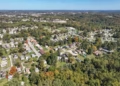




Nestled in the rolling hills of Western Pennsylvania, Greensburg emerges as a city where history’s echoes blend seamlessly with modern vitality. As the county seat of Westmoreland County, this unassuming urban center, just 30 miles southeast of Pittsburgh, anchors the Laurel Highlands region with a population hovering around 15,000. Part of the broader Pittsburgh metropolitan area, Greensburg defies the stereotype of a fading industrial town, instead positioning itself as a cultural and educational hub that draws on its Revolutionary War roots and coal-mining past to fuel a forward-looking identity.
In an age when small cities grapple with relevance, Greensburg stands out for its strategic revitalization efforts, transforming historic structures into vibrant venues that attract visitors and residents alike. This post explores the multifaceted character of Greensburg, from its foundational narratives to its contemporary pulse, revealing a place where community resilience meets artistic innovation.

Historical Evolution: From Frontier Outpost to Cultural Cornerstone
Greensburg’s origins trace back to the turbulent days of the American frontier. The area first took shape as a settlement known as Newtown, centered around an inn along the wagon trail connecting Philadelphia to Fort Pitt—what would become Pittsburgh. In 1782, a devastating raid by Native Americans and British Loyalists destroyed Hannastown, the original county seat of Westmoreland County, prompting a relocation to Newtown in 1785. By 1787, the Westmoreland County Courthouse stood proudly on the site, a symbol of stability amid post-Revolutionary uncertainty. The city owes its name to Nathanael Greene, the Continental Army general whose strategic prowess helped secure American independence.
Incorporated as a borough in 1799 and elevated to third-class city status in 1928, Greensburg grew modestly through the early 19th century. The real surge came after 1850, when it solidified as a bustling county seat filled with inns, shops, and industrious locals. The arrival of the Pennsylvania Railroad turned it into a key stop, accelerating development. By the late 1800s, discoveries of soft coal in nearby areas ignited a mining boom. Operations like the Greensburg/Keystone mines, Hawksworth, and Radebaugh extracted and shipped vast quantities of coal via rail, drawing workers and fostering a robust economy. This era birthed downtown’s commercial heyday, with department stores such as Troutman’s, JCPenney, Sears, and Royers serving as social anchors.
The 20th century brought waves of change. Post-World War II suburbanization expanded residential neighborhoods, while cultural institutions took root. The Westmoreland County Museum of Art opened in 1959, followed by the University of Pittsburgh at Greensburg in 1963. Retail landscapes shifted dramatically with the 1965 debut of Greengate Mall and 1977’s Westmoreland Mall, pulling commerce away from downtown and contributing to the closure of iconic stores by the late 1970s. Yet, Greensburg’s spirit of adaptation shone through in the 1990s revitalization initiatives. The Palace Theatre and historic Train Station underwent restorations, and Seton Hill University added a performing arts center in 2009. More recently, the 2015 expansion of the Westmoreland Museum of American Art and the opening of a Lake Erie College of Osteopathic Medicine satellite campus underscored the city’s commitment to education and culture. As the seat of the Roman Catholic Diocese of Greensburg, it also maintains a strong spiritual dimension, with institutions like Saint Emma Monastery providing retreats since 1931.
This historical arc illustrates Greensburg’s knack for reinvention. From a scarred frontier settlement to a post-industrial gem, the city has navigated economic upheavals with a focus on heritage preservation, ensuring that its past informs rather than hinders progress.
Geography and Natural Setting: Amid the Laurel Highlands
Greensburg occupies a compact 4.05 square miles of land, all within the ecoregions of the Laurel Highlands and Western Allegheny Plateau. At an elevation of 1,017 feet, it sits at coordinates 40°17′52″N 79°32′32″W, offering a landscape of gentle hills and verdant valleys that transition into the more rugged Appalachian terrain. The city’s position southeast of Pittsburgh places it in a transitional zone where urban accessibility meets rural tranquility, with the Allegheny River’s influence felt indirectly through nearby waterways.
Climate here follows a humid continental pattern, marked by four distinct seasons. Winters bring moderate snowfall, averaging around 40 inches annually, with temperatures dipping to the low 20s Fahrenheit. Summers are warm and humid, peaking in the mid-80s, while spring and fall offer mild transitions ideal for outdoor pursuits. The area’s topography contributes to occasional severe weather; historical tornado activity sits slightly below Pennsylvania’s average, though events like the 1980 category F4 tornado nearby serve as reminders of nature’s power.
This setting fosters a deep connection to the outdoors. Surrounding state parks and trails, such as those in the Laurel Highlands, provide hiking, biking, and wildlife viewing opportunities. Greensburg itself integrates green spaces like St. Clair Park, home to the Robertshaw Amphitheater, where summer concerts unfold against a backdrop of native hardwoods. In editorial terms, the geography underscores Greensburg’s appeal as a respite from metropolitan hustle—a place where the land’s contours shape not just the skyline but the community’s grounded ethos.
Demographics and Community Fabric: A Tapestry of Diversity and Stability
Greensburg’s population narrative reflects broader American trends of growth, peak, and stabilization. From a modest 685 residents in 1810, it ballooned to 6,508 by 1900 amid the coal rush, reaching 13,012 in 1910 and a high of 17,383 in 1960. By 2020, the count stood at 14,976, with a density of 3,693 per square mile. This slight decline from mid-century highs mirrors deindustrialization, yet the city maintains a stable, close-knit vibe.
The 2000 census data, while dated, offers a snapshot: 93.43% White, 3.91% African American, 0.70% Asian, and 1.08% Hispanic or Latino, with a median age of 39. Households averaged 2.11 people, with 24.1% including children under 18. Income levels showed a median household figure of $30,324, with 13.6% below the poverty line—indicators of a working-class foundation tempered by educational and service-sector opportunities.
Today’s demographics hint at increasing diversity, driven by influxes from Pittsburgh’s orbit and institutions like Seton Hill University, which attract students from varied backgrounds. The community prides itself on inclusivity, evident in cultural exchanges with sister cities Belize City, Belize, and Cercemaggiore, Italy. Neighborhoods range from historic Academy Hill, with its preserved architecture, to newer developments like Saybrook Village in the north. This mosaic fosters a sense of belonging, where annual events and volunteer-driven initiatives strengthen bonds. In a polarized world, Greensburg’s demographic steadiness offers a model of quiet coexistence, blending tradition with subtle evolution.
Economy and Industry: From Coal to Commerce
Greensburg’s economic story is one of transformation. Rooted in the Pennsylvania Railroad and late-19th-century coal mining, the city once thrived on extraction and transport. Mines shipped coal nationwide, supporting a downtown retail scene with bustling department stores. The post-war era shifted gears; malls like Greengate (1965) and Westmoreland (1977) decentralized shopping, leading to urban core challenges.
Revitalization in recent decades has pivoted toward services, education, and healthcare. Major employers include Excela Health, a regional hospital system; the Tribune-Review newspaper; and state offices employing around 300 in labor and industry roles. Retail remains a powerhouse, with over 5 million square feet of space making Greensburg the Laurel Highlands’ commercial epicenter. Westmoreland Mall, now incorporating Live! Casino Pittsburgh, draws gamblers and shoppers, while Greengate Centre anchors big-box outlets like Walmart.
Light industry flourishes in peripheral parks, and housing booms in areas like Evergreen Hill signal residential appeal. The presence of Hillandale Farms adds an agricultural layer, while professional offices and banks occupy restored historic buildings. Unemployment rates typically align with state averages, bolstered by proximity to Pittsburgh’s job market. Editorially, this evolution highlights Greensburg’s adaptability—shedding coal’s grime for a polished service economy that leverages location and heritage to sustain growth.
Education Landscape: Nurturing Minds in a Historic Setting
Education forms the intellectual backbone of Greensburg. Public schooling divides between the Hempfield Area School District, serving over 7,000 students across 95 square miles, and Greensburg Salem School District, educating 3,600 in a 51-square-mile area including the city proper. Both emphasize comprehensive curricula, with extracurriculars in arts and athletics fostering well-rounded development.
Private options include Greensburg Central Catholic High School and Aquinas Academy, offering faith-based alternatives. Higher education shines brightly: Seton Hill University, founded in 1885 by the Sisters of Charity, transitioned to coeducational status in 2002 and now enrolls thousands, with a downtown performing arts center enhancing community ties. The University of Pittsburgh at Greensburg, established in 1963, earns accolades for regional excellence, while branches of Carlow University, Lake Erie College of Osteopathic Medicine (opened 2009), and Triangle Tech provide specialized programs.
Nearby, Saint Vincent College in Latrobe and Westmoreland County Community College in Youngwood extend options. The Greensburg Hempfield Area Library supports lifelong learning. This robust system not only equips locals but attracts talent, positioning Greensburg as an educational enclave that bridges tradition and innovation.
Cultural Scene: A Vibrant Palette of Arts and Traditions
Culture thrives in Greensburg, making it Western Pennsylvania’s artistic nerve center. The Westmoreland Museum of American Art, specializing in works from 1750 to 1950, underwent a major expansion in 2015, drawing collectors and enthusiasts. The Palace Theatre, restored in the 1990s, hosts Broadway tours and concerts, while the Robertshaw Amphitheater in St. Clair Park stages the Summer Sounds Concert Series, featuring free outdoor performances.
The Westmoreland Symphony Orchestra and Westmoreland Cultural Trust drive revitalization, renovating landmarks like the Train Station. Community theater groups—Stage Right! for musicals and Greensburg Civic Theatre (since 1951) for diverse productions—engage locals at venues like the Greensburg Garden and Civic Center. Plans for an interactive science center, though on hold, reflect ambitions for family-oriented education.
Religious and fraternal elements add depth: The Church of Jesus Christ’s World Conference Center, Kappa Delta Rho’s national headquarters, and Saint Emma Monastery underscore spiritual and social fabrics. Annual festivals, including art walks and holiday parades, animate the streets, blending heritage with contemporary flair. Greensburg’s culture isn’t elitist; it’s communal, inviting participation that enriches daily life.
Attractions and Landmarks: Discovering the City’s Treasures
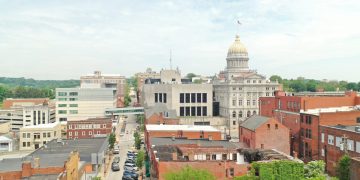
Greensburg abounds with sites that captivate. The Westmoreland County Courthouse, dating to 1906, anchors the downtown historic district, its dome a skyline icon. Nearby, the Greensburg Railroad Station and Academy Hill Historic District, both on the National Register, preserve architectural gems.
Cultural hotspots like the Palace Theatre and Westmoreland Museum offer immersive experiences, while St. Clair Park provides recreational green space. Old Hanna’s Town, a reconstructed Revolutionary-era site nearby, educates on early history. Shopping at Westmoreland Mall or Greengate Centre combines retail with entertainment, especially at the casino.
Outdoor enthusiasts enjoy trails in the Laurel Highlands, with Greensburg as a gateway. The Garden and Civic Center hosts events, from weddings to expos. These attractions weave a narrative of accessibility, where history and leisure converge to create memorable visits.
Notable Figures: Luminaries from the Laurel Highlands
Greensburg has birthed talents across fields. Actress Carroll Baker and drag queen Lydia B Kollins represent entertainment, while musicians like Paul Gilbert (Mr. Big) and Brett Detar add rock credentials. Sports figures include golfer Rocco Mediate and wrestler Greg Jones.
Literary voices like K.C. Constantine and Stephen Dau hail from here, alongside social scientist Todd Gallagher and photographer Bruce Weber. Historical ties include Jesse Root Grant, father of Ulysses S. Grant, and Revolutionary War general Arthur St. Clair. Politicians like John Latta and Cyrus E. Woods, plus baseball’s Doc Gessler, round out a diverse roster. These individuals embody Greensburg’s influence, exporting creativity and leadership.
Events and Festivals: The Rhythm of Community Life
Greensburg’s calendar pulses with gatherings that unite. The Summer Sounds Concert Series draws crowds to amphitheater shows, while the Westmoreland Arts & Heritage Festival in nearby Twin Lakes Park celebrates crafts and music each July. Holiday events, like the Light-Up Night parade, illuminate downtown.
Theater productions at the Palace and civic center provide year-round entertainment. Recent additions, such as 2025’s expanded museum exhibits, reflect ongoing vibrancy. Sports tournaments at local fields and casino events add variety. These occasions foster connection, turning Greensburg into a lively social hub.
Future Horizons: Charting a Path Forward
Looking ahead, Greensburg eyes sustainable growth. Downtown revitalization continues, with potential for the stalled science center. Educational expansions and healthcare advancements promise jobs, while eco-tourism in the Highlands could boost visitation.
Challenges like retail shifts and demographic aging loom, but the city’s track record suggests resilience. Investments in infrastructure and culture position it for prosperity in a post-pandemic world.
Reflections on a Timeless Town
Greensburg encapsulates small-city America’s best traits—rooted history, adaptive economy, and vibrant culture. As it navigates the 21st century, this Westmoreland jewel remains a testament to enduring community spirit.