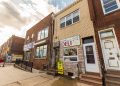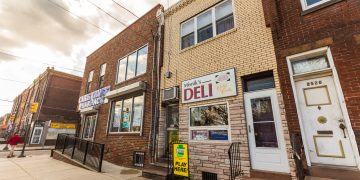




There are streets in American cities that function as more than infrastructure. They are living archives — layered with the sediment of every era that passed through them, every wave of people who walked their sidewalks, opened their storefronts, or sat on their stoops watching the neighborhood shift around them. Allegheny Avenue in Philadelphia is one of those streets.
Running east to west across the top of North Philadelphia, Allegheny Avenue stretches from the industrial fringe near the Delaware River waterfront all the way west through Nicetown and beyond, cutting through some of the city’s most historically significant, economically complex, and culturally rich neighborhoods. It is not glamorous in the way that Market Street or Broad Street commands tourist attention. It does not appear in glossy Philadelphia travel guides. But for the hundreds of thousands of Philadelphians who have grown up along it, worked its blocks, worshipped in its churches, or buried their loved ones in the shadow of its elevated transit line, Allegheny Avenue is as real and as essential as the city itself.
To understand this street is to understand Philadelphia — not the polished version sold to convention-goers and history tourists, but the gritty, resilient, complicated Philadelphia that has always existed just beyond the postcard frame.

The Geography of a Long Street
Allegheny Avenue runs for several miles through the northern reaches of Philadelphia, functioning as a kind of informal boundary between the city’s densely packed row-house neighborhoods to the south and the slightly more open residential fabric to the north. It passes through or directly touches neighborhoods including Port Richmond, Kensington, Fairhill, North Philadelphia proper, and Nicetown-Tioga.
The street’s character shifts dramatically as you travel its length. In the east, closer to Kensington and Port Richmond, the avenue bears the imprint of the old industrial working class — the tight brick rowhouses, the corner taprooms, the Polish Catholic churches and Slovak social halls that once anchored European immigrant communities who came to this part of the city to work in the factories, textile mills, and rail yards that defined North Philadelphia’s economy from the mid-19th century through the mid-20th century.
Move west toward Broad Street and the avenue’s demographics shift into predominantly African American neighborhoods that have been home to successive generations of Black Philadelphians since the Great Migration brought hundreds of thousands of people from the American South to Northern cities between 1910 and 1970. The blocks here carry a different kind of memory — one shaped by redlining, disinvestment, community organizing, cultural institution-building, and an unbroken thread of Black civic life that has persisted through every economic cycle.
Continue west past Broad and you move into Nicetown-Tioga, a neighborhood whose very name gestures toward a pastoral past that was overtaken by industry long ago. Here the avenue passes near shuttered factories and rebuilt commercial strips, communities working to define what comes next.
Industry, Immigration, and the Original Working-Class Philadelphia
In the 19th century, the land around Allegheny Avenue was not yet the dense urban fabric that would eventually define North Philadelphia. It was the urban frontier — the place where the city was actively expanding outward to accommodate explosive population growth driven by industrialization. Textile manufacturing, in particular, concentrated heavily in this part of the city. The neighborhoods of Kensington and North Philadelphia became the American capital of textile production in the late 19th century, and the workers who ran those looms, stitched those garments, and maintained those machines lived in the rowhouses that still stand — often in varying states of repair — on the blocks feeding into Allegheny Avenue.
The immigrants who settled here came from Ireland, Poland, Germany, Lithuania, and across the European continent. They built institutions to anchor their communities: Catholic parishes were the cornerstone of nearly every immigrant neighborhood in this corridor. Sacred Heart of Jesus Church, Saint Adalbert’s, and other imposing stone structures still rise above the streetscape today, many of them serving congregations that look nothing like the communities that originally built them — a visible reminder of the neighborhood’s successive demographic transformations.
The Market-Frankford Line, the el train that runs above the avenue, was extended into this part of the city in the early 20th century. The elevated transit line fundamentally shaped the commercial character of Allegheny Avenue. Wherever an el stop appeared, a commercial node emerged. Merchants opened stores at the base of the stairwells. Produce vendors, clothing shops, barbershops, and lunch counters clustered along the blocks directly adjacent to the stations. The avenue became a linear marketplace shaped by the rhythm of the transit line running above it.
The Great Migration and the Transformation of the Corridor
The neighborhoods along Allegheny Avenue did not stay static. Beginning in the 1920s and accelerating dramatically through the 1940s and 1950s, the African American population of North Philadelphia grew rapidly as Black families migrated from the South seeking economic opportunity and an escape from the brutal enforcement of Jim Crow. Philadelphia’s industries were hiring, and the city’s Black population grew from roughly 84,000 in 1910 to more than 250,000 by 1950.
The transformation of the neighborhoods around Allegheny Avenue was not seamless or without conflict. Philadelphia had its own entrenched residential segregation enforced through real estate covenants, discriminatory lending practices, and the social pressure of white ethnic communities who often resisted integration with violence. Black families were frequently limited to specific blocks and neighborhoods, concentrating the growing African American community in certain corridors of North Philadelphia.
But within those constraints, something remarkable was built. The stretch of Allegheny Avenue that runs through North Philadelphia proper became a vibrant hub of African American civic life — a secondary commercial district where Black-owned businesses thrived, where institutions of cultural and spiritual importance emerged, and where community identity was actively constructed and maintained.
Churches, always central to Black community life in Philadelphia, rose throughout the corridor. Storefront congregations competed with established Baptist and AME denominations for congregants. The sounds of gospel music could be heard drifting from open windows on Sunday mornings. Community organizations — neighborhood associations, mutual aid societies, athletic clubs — operated out of rented rooms and church basements along and near the avenue.
Broad and Allegheny: The Center of a World
The intersection of Broad Street and Allegheny Avenue deserves its own chapter in any honest account of North Philadelphia’s history. For much of the 20th century, this corner represented one of the most important commercial and social hubs in African American Philadelphia.
At its height, this intersection was ringed by theaters, department stores, specialty shops, insurance offices, and professional practices. It was where you came to do business, to be seen, to celebrate. The commercial vitality of this intersection reflected something that urban historians have increasingly come to recognize and respect: Black economic life in mid-century American cities was far more dynamic, self-contained, and creative than mainstream narratives acknowledged.
The decline of this intersection tracks the broader decline of Philadelphia’s industrial economy beginning in the 1960s. Factory closures, white flight, urban renewal policies that prioritized highway construction over neighborhood preservation, and the collapse of federal investment in urban infrastructure all hit North Philadelphia with devastating force. By the 1970s and 1980s, the blocks around Broad and Allegheny had experienced significant disinvestment. Storefronts closed. Property values collapsed. The population declined as families who could leave did.
The human cost of that decline was enormous. Poverty concentrated in neighborhoods that had already been starved of resources. The drug crisis of the 1980s and 1990s hit this corridor hard. Vacant lots appeared where row houses had been demolished. The physical fabric of the neighborhood began to reflect the economic abandonment it had suffered.
Yet even in the worst years, Allegheny Avenue never became a dead street. Churches continued to anchor their communities. Entrepreneurs — often with minimal capital and maximum determination — kept opening businesses. Community organizations formed and reformed to fill the gaps left by retreating public investment. The street persisted.
The El: Noise, Connection, and a Peculiar Kind of Intimacy
No account of Allegheny Avenue is complete without sustained attention to the Market-Frankford Line — the elevated train that runs directly above the street for much of its length. The el is the avenue’s most distinctive physical feature, its most constant soundtrack, and in a real sense its organizing infrastructure.
The relationship between a neighborhood and its elevated transit is always complicated. On one hand, the el provides connectivity — it links North Philadelphia to Center City and to neighborhoods across the city with frequency and efficiency. For residents who depend on public transit, which in lower-income neighborhoods means most residents, the el is not a convenience but a necessity. It is how people get to work, to medical appointments, to school, to the lives they’re trying to build.
On the other hand, the physical presence of an elevated structure above a commercial street has well-documented effects on urban character. The columns create a partial barrier effect. The noise — and it is genuinely substantial, the kind of train noise that rattles windows and interrupts conversations — can discourage certain kinds of commercial activity. The structural shadow cast by the elevated viaduct creates a dimmer, more industrial atmosphere beneath the tracks.
Allegheny Avenue has absorbed all of this and kept moving. The el is simply part of the street’s identity at this point — as much as the narrow rowhouses, the corner stores, or the church steeples. Longtime residents barely register the sound anymore. The stations themselves have become community gathering points in the way that transit infrastructure often does in dense urban neighborhoods — places where people wait, talk, sell things, watch the street.
The Crisis That Defines the Present: Kensington’s Shadow
Any honest 2024 assessment of Allegheny Avenue must address the Kensington opioid crisis, which has reshaped the eastern end of the avenue and the neighborhoods immediately adjacent to it. The intersection of Kensington and Allegheny Avenue — commonly referred to simply as K&A — became in the 2010s one of the most visible and devastating open-air drug markets in the United States.
The concentration of opioid addiction, homelessness, and open-air drug use along Kensington Avenue and its surrounding streets, including the stretch of Allegheny Avenue near that intersection, has been reported extensively by national and international media. It has drawn public health officials, politicians, documentary filmmakers, and advocates from across the country. It has also deepened the stigma attached to this entire part of North Philadelphia — a stigma that many longtime residents, community organizers, and local business owners find infuriating, because it flattens the complexity and richness of the corridor into a single devastating image.
The people living this crisis are largely not from the neighborhoods that have become associated with it. Many came from elsewhere — suburban Pennsylvania, New Jersey, other parts of the country — drawn by the availability and low cost of drugs in a neighborhood with limited enforcement capacity and deep structural poverty. The community that has always lived along Allegheny Avenue has, in many ways, been victimized twice: first by the addiction crisis itself, and then by the national narrative that made their neighborhood synonymous with collapse.
The city of Philadelphia has attempted various interventions over the years, with mixed and contested results. The question of what the right response looks like — and who gets to decide — remains fiercely debated between public health advocates, community residents, elected officials, and people experiencing addiction themselves.
Resurrection and Reinvention: What’s Actually Happening Now
Despite everything — or perhaps because of it — Allegheny Avenue is also a street in active transformation. The forces of reinvestment and community revitalization that have swept through parts of Philadelphia over the past two decades have not bypassed the corridor entirely, though their effects have been uneven.
In sections of North Philadelphia away from the acute crisis zones, new housing construction has appeared. Community development corporations have worked to stabilize blocks, rehabilitate rowhouses, and attract commercial investment. The Puerto Rican and Dominican communities concentrated in the Fairhill neighborhood near Allegheny Avenue have sustained vibrant commercial activity along the corridor for decades, with bodegas, restaurants, beauty supply shops, and cultural institutions that reflect the deep roots of Latino Philadelphia in this part of the city.
Church-based community organizations continue to be among the most important actors in the neighborhood’s daily life. Many of the largest institutions operating in North Philadelphia — providing food assistance, youth programming, job training, and housing services — are faith-based entities that have been present in this corridor for generations.
The murals that have proliferated across Philadelphia’s walls have reached Allegheny Avenue in force. The Mural Arts Program, one of the city’s most celebrated public institutions, has placed works throughout the corridor that celebrate the neighborhood’s history, honor community members lost to violence or illness, and assert the continuing vitality and pride of the people who call this place home. Walking along sections of the avenue, the murals function as an unofficial community newspaper — a visual record of what the neighborhood values, mourns, and aspires toward.
What Allegheny Avenue Teaches
Streets like Allegheny Avenue are uncomfortable subjects for a city that often prefers its narratives of resilience and renaissance to be unambiguous. The avenue complicates the story. It holds too much history — too many cycles of prosperity and decline, too many communities that built something real here and then watched it erode — to permit easy optimism.
But easy optimism was never the right response to a street like this. What Allegheny Avenue deserves instead is honest attention — the kind that sees both the continuing devastation of the opioid crisis and the neighbor who has been maintaining the same block for forty years; both the shuttered storefronts and the Dominican restaurant that is always, improbably, full; both the poverty that federal and municipal policy helped create and the extraordinary tenacity of the people who never left.
Philadelphia is a city that contains multitudes, and Allegheny Avenue is one of the streets where those multitudes are most visibly, most honestly present. The el rumbles overhead. The murals watch from the walls. The churches hold their services. The corner store opens at six in the morning. The avenue carries on — carrying all of it, as it always has, forward.
Allegheny Avenue remains one of the defining corridors of North Philadelphia, with a history inseparable from the larger story of American urban life: immigration, industry, migration, disinvestment, crisis, and the persistent, complicated work of community.