



Philadelphia and the automobile have had a complicated relationship for over a century. From the cramped brick rowhouse blocks of South Philly to the broad commercial strips of Northeast Philadelphia, parking has always been a source of joy, frustration, political theater, and neighborhood warfare. Longtime residents will tell you that a neighbor who steals your shoveled-out snow spot is a neighbor you remember for life.
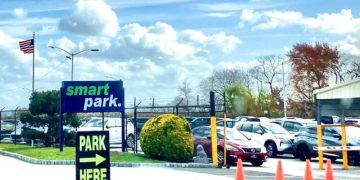
But something is shifting. Quietly, incrementally, and with more technological sophistication than most people realize, Philadelphia has been rolling out a Smart Park system — a technology-driven approach to managing public parking that uses real-time sensors, dynamic pricing, digital payment infrastructure, and data analytics to make the city’s parking supply work smarter. If you’ve pulled up the ParkPhilly app recently, circled a block in Center City and noticed a digital sign telling you there are three open spots ahead, or paid for street parking with your phone, you’ve already brushed up against this system without fully knowing it.
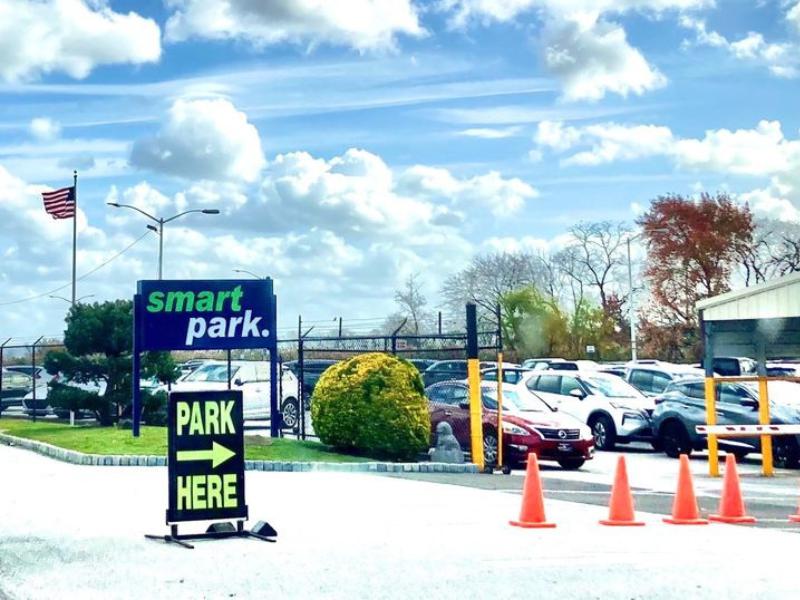
This piece is a deep dive into Smart Park in Philadelphia — what it actually is, where it lives in the city, what it’s getting right, what it’s fumbling, and why it matters far beyond the question of where to leave your car on a Tuesday afternoon.
What Smart Park Actually Means
The phrase “Smart Park” gets used loosely. In Philadelphia’s context, it refers to a coordinated ecosystem of parking management technologies deployed by the Philadelphia Parking Authority (PPA), the city government, and various private operators across different zones of the city.
At its core, Smart Park operates on a few interlocking technologies:
In-ground sensors embedded beneath parking spaces detect whether a space is occupied. These sensors relay data wirelessly to a central management platform, which in turn feeds real-time occupancy information to digital wayfinding signs, the ParkPhilly mobile app, and connected city infrastructure.
Dynamic pricing — sometimes called demand-responsive pricing — adjusts the cost of parking based on current demand. When a block is nearly full, prices nudge upward to encourage drivers to look elsewhere or consider transit. When a block is underutilized, prices drop to attract users and fill revenue gaps. It’s the same logic that governs surge pricing on rideshare apps, applied to public infrastructure.
Multi-modal payment allows drivers to pay at kiosks, through the ParkPhilly app (available on iOS and Android), or via license plate recognition in some facilities, without needing to display a physical receipt.
Data analytics feed all of this occupancy and transaction data into dashboards that city planners, transportation officials, and the PPA use to understand traffic patterns, identify chokepoints, and make policy decisions about where parking supply is needed and where it should be reduced.
The PPA’s administrative headquarters at 3101 Market Street, Philadelphia, PA 19104 serves as the operational and policy nerve center for much of this infrastructure.
Center City: The Laboratory
If you want to see Smart Park working at its most mature and visible, Center City is where to look. The stretch of Market Street between Broad Street and 30th Street, along with the dense grid of Old City, Rittenhouse Square, and the Avenue of the Arts corridor, represents the most heavily instrumented parking zone in the city.
The blocks surrounding Rittenhouse Square (the park is bounded by Walnut Street to the north, Locust Street to the south, 18th Street to the east, and 19th Street to the west) have been part of the demand-responsive pricing pilot since the early phases of the PPA’s technology overhaul. Parking on West Rittenhouse Square streets can cost anywhere from $2 to $6 per hour depending on time of day and current block occupancy — a range deliberately designed to keep occupancy around 80 to 85 percent, the efficiency sweet spot where there are almost always a few open spaces without the block being so empty it becomes dead commercial real estate.
On and around Chestnut Street from 10th to 18th Streets, kiosks with touchscreen payment interfaces replaced single-space meters several years ago, and the ParkPhilly app integration means a driver who parked at 11th and Chestnut can add time to their session remotely without jogging back to feed the meter. That single feature — the ability to extend a parking session from your phone — has meaningfully changed the calculus of short-term urban parking.
The Washington Square area (the square itself sits at 6th and Walnut Streets) shows a slightly different Smart Park face: the proximity to Jefferson Hospital, Pennsylvania Hospital at 800 Spruce Street, and several medical office buildings creates a consistent weekday occupancy pressure that the demand pricing system handles by nudging prices upward between 8 a.m. and 4 p.m. and softening them substantially in the evenings when restaurant and entertainment traffic takes over.
University City: Where Smart Park Meets Smart Campus
The western edge of Philadelphia, anchored by the University of Pennsylvania and Drexel University, presents a fascinating Smart Park case study because the city’s public parking infrastructure here operates in close proximity — and sometimes in direct competition — with the universities’ own managed parking systems.
Penn’s campus parking operation, centered around structures like the 3160 Chestnut Street Garage and the lots along Walnut Street, uses its own occupancy management and dynamic pricing systems that don’t fully integrate with the city’s ParkPhilly platform but operate on similar principles. The result is an information patchwork: a driver on the 3400 block of Spruce Street is operating in the city’s Smart Park zone, but two blocks over in a Penn-managed surface lot, they’re in a completely different payment and occupancy system.
This fragmentation is one of the persistent frustrations that transportation planners and parking reform advocates point to when assessing Philadelphia’s Smart Park rollout. The city has the technology. The universities have the technology. But interoperability — the ability for a single dashboard or app to show a driver the full picture of available spaces across both public and private operators — remains more aspiration than reality.
The 30th Street Station area at 2955 Market Street is a particularly acute example of this. Amtrak passengers, SEPTA commuters, and Greyhound riders converging on one of the busiest transit hubs on the East Coast generate massive parking demand. The surface lots and garages in that immediate vicinity are a mix of city-managed, privately operated, and transit authority-controlled spaces. Smart Park sensors exist in some of them. In others, the parking attendant with a walkie-talkie is still the primary occupancy management tool.
Northern Liberties and Fishtown: The Emerging Frontier
The neighborhoods north of Center City — Northern Liberties, Fishtown, Kensington — represent Smart Park’s expanding edge. These neighborhoods have undergone dramatic residential and commercial transformation over the past fifteen years, and parking demand has risen sharply as restaurants, bars, markets, and new housing have compressed into blocks that were originally industrial and never designed for dense parking needs.
The stretch of Frankford Avenue from Girard Avenue up to Norris Street has been the subject of recent Smart Park infrastructure investment. Kiosk upgrades, sensor deployments, and ParkPhilly app integration have been rolled out in stages here, and the PPA has used the real-time occupancy data to flag blocks where occupancy regularly hits 95 percent or above — a sign that parking prices may need adjustment or that alternative transportation needs more investment.
The Liberty Lands Park area (the park is located at 913 North Bodine Street) sits in a neighborhood where weekend nightlife and the weekend farmers market at 2nd Street and Germantown Avenue create a predictable weekly parking crunch. Smart Park data from this zone has been used in conversations about whether additional short-term loading zones — rather than standard metered spaces — would better serve the commercial character of the strip.
In Fishtown, the zone around Frankford Hall at 1210 Frankford Avenue and the cluster of restaurants along Frankford Avenue between Oxford Street and Norris Street shows how Smart Park data can serve as something more than a parking management tool — it becomes economic intelligence. When occupancy data shows that a commercial corridor is maxing out parking supply on Thursday through Sunday evenings, that’s information a business association can take to city planners when arguing for zoning changes, transit investments, or infrastructure upgrades.
The Philadelphia Parking Authority: A Complicated Protagonist
You cannot talk about Smart Park in Philadelphia without talking about the PPA, and you cannot talk about the PPA without acknowledging its complicated history. The authority has been the subject of political controversies, management criticisms, and public frustration for decades. Its parking enforcement operations — the familiar beige-jacketed officers who have left countless Philadelphians gripping yellow tickets — are not exactly the stuff of civic pride.
But on the technology and infrastructure side, the PPA has made genuine progress. The investment in sensor networks, dynamic pricing software, and the ParkPhilly platform represents a significant operational modernization. The authority’s technology division, operating out of the Market Street headquarters, has brought in data analytics talent and has worked with urban planning researchers to think seriously about what a well-functioning parking ecosystem actually looks like.
One useful way to understand the PPA’s Smart Park position is to look at its ParkPhilly app metrics. The app has seen consistent growth in transactions since its broader rollout, and the proportion of parking sessions paid via mobile has grown substantially year over year. That’s a behavioral shift that reflects genuine user adoption, not just technological availability.
The PPA also manages several Smart Park-integrated garages, including the Autopark at Independence Mall at 101 North 2nd Street and the Autopark at City Hall at 1000 Ludlow Street. These facilities use license plate recognition, pre-booking through the ParkPhilly platform, and real-time availability displays at the entrance to smooth the entry and exit experience.
South Philadelphia and the Stadium Complex: Peak Demand Management
Few parking challenges in Philadelphia are more dramatic — or more logistically revealing — than what happens on a game day at the Sports Complex in South Philadelphia. The Wells Fargo Center, the Lincoln Financial Field, and Citizens Bank Park all cluster around Pattison Avenue and Broad Street, and the parking demand surge on Eagles, Phillies, Flyers, and Sixers game days dwarfs anything the rest of the city generates.
Smart Park technology in this zone functions differently than in the commercial grid. Here, the emphasis is less on dynamic pricing (most stadium lots operate on a flat game-day rate) and more on traffic flow management and pre-arrival communication. The city’s connected signage infrastructure along Broad Street — one of Philadelphia’s main north-south arterials — displays parking availability information for the stadium lots as drivers approach from the north, allowing some degree of routing before drivers commit to a particular lot.
Real-time occupancy data from the South Philadelphia Sports Complex parking fields feeds into the broader city transportation management system at the Philadelphia Traffic Management Center, which monitors and adjusts signal timing on approach corridors to reduce post-event gridlock. This is Smart Park in its most explicitly urban-planning-as-infrastructure guise — the parking data is a tool for managing an entire transportation ecosystem, not just counting empty spaces.
The FDR Park at 1500 Pattison Avenue, adjacent to the Sports Complex, has been at the center of longer-term debates about whether surface parking lots serving the stadiums could be partially converted to other uses on non-game days, with demand-responsive management during events. Smart Park data on utilization patterns forms part of the evidentiary basis for those conversations.
The Equity Problem Nobody Wants to Talk About
Smart Park in Philadelphia has a genuine equity dimension that the city’s official communications tend to underplay. Dynamic pricing is efficient in the economist’s sense — it clears markets, reduces cruising, and improves utilization rates. But it’s not neutral.
When parking on a given block in Rittenhouse Square costs $5 an hour during peak demand, that’s not a hardship for the attorney headed to a client meeting. For the home health aide making $16 an hour who needs to park near a patient’s apartment, it’s a meaningful cost. The PPA has explored low-income discount programs and has partnered with some community organizations on outreach, but the structural reality is that demand-responsive pricing optimizes for aggregate efficiency, not equitable access.
The technology gap is a related problem. ParkPhilly works well if you have a smartphone, a data plan, and a credit or debit card. The city has maintained kiosk payment options precisely to avoid creating a cash-exclusion problem, and kiosks do accept cash at many locations. But the seamless experience — the extend-your-session-from-your-phone feature, the real-time availability map, the pre-booking for garages — is disproportionately available to higher-income, higher-tech users.
Neighborhoods in West Philadelphia along the Baltimore Avenue corridor from 40th to 52nd Streets, and in parts of North Philadelphia around Broad Street and Erie Avenue (around 2900 North Broad Street), have seen slower Smart Park rollout than Center City and the rapidly gentrifying inner-ring neighborhoods. Whether this reflects rational prioritization of high-demand zones or reflects a bias toward investment in already-prosperous areas is a question worth asking persistently.
What the Data Actually Shows
When the city and PPA have released public data on Smart Park outcomes, the picture is genuinely encouraging in some respects. Blocks in the demand-responsive pricing pilot zones have shown occupancy rates that hover closer to the 80 to 85 percent efficiency target than they did before dynamic pricing, meaning fewer blocks are simultaneously overfull and nearby blocks are simultaneously empty. Average cruising time — the time a driver spends looking for a space — has declined in monitored Center City zones.
Revenue metrics have also been positive. Dynamic pricing in high-demand zones generates more revenue than fixed-rate pricing, and that revenue supports both PPA operations and, through city budget mechanisms, broader transportation investments.
Transaction data from ParkPhilly shows that mobile payment adoption has meaningfully reduced the compliance cost of parking — when paying is frictionless, more people pay, and the system as a whole functions better. Illegal parking, double-parking, and blocking behavior often stem from the friction of finding a space and paying for it; reducing that friction has modest but measurable effects on street flow.
The harder question — what Smart Park means for transit mode share, for car ownership decisions, for long-term transportation patterns in Philadelphia — is much more difficult to answer, and the city is only beginning to think carefully about how parking management data connects to those larger questions.
The Road Ahead
Philadelphia’s Smart Park system is neither a finished product nor a failed experiment. It is, more accurately, a work in progress with real achievements and real gaps, deployed across a city that is simultaneously progressive in its transportation ambitions and constrained by funding realities, political pressures, and the physical legacy of a built environment designed around the car.
The most promising near-term development is the potential for deeper integration between the PPA’s Smart Park data and SEPTA’s transit operations. If real-time parking availability information could be connected to transit capacity and arrival data — allowing a driver approaching the city to make a genuinely informed decision about whether to park at a transit hub and take the subway versus drive all the way in — that would represent Smart Park functioning as genuine multimodal infrastructure rather than just a smarter version of the same old parking paradigm.
The SEPTA Suburban Station at 1500 John F. Kennedy Boulevard and Jefferson Station at 1234 Market Street are natural nodes for this kind of integration. The physical infrastructure — parking nearby, transit in the station — already exists. What’s missing is the data connection that makes them feel like a coherent system to the traveler.
Philadelphia is, at its core, a city of neighborhoods — dense, opinionated, fiercely local. The neighborhoods that have seen Smart Park investment most deeply are beginning to normalize a different relationship with parking: less territorial, more transactional, more connected to the broader transportation picture. Whether that normalization spreads, and whether it spreads equitably, will tell us a great deal about what kind of city Philadelphia wants to be in the decades ahead.
Smart Park is, in the end, not really about parking. It’s about whether a mid-sized American city can use data, technology, and genuine policy ambition to start treating its public right-of-way as a shared resource rather than an entitlement. Philadelphia is trying. The city has always been better at trying than it gets credit for.
The Philadelphia Parking Authority’s main customer service office is located at 8401 Roosevelt Boulevard, Philadelphia, PA 19152. The ParkPhilly app is available free on iOS and Android. For zone maps, pricing schedules, and real-time availability information, visit the PPA website at parkphilly.com.