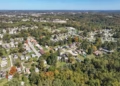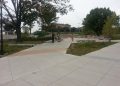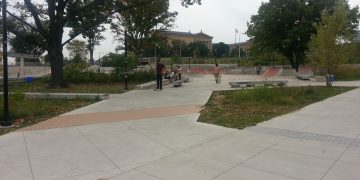




There is a stretch of land along the west bank of the Schuylkill River in Philadelphia where something genuinely rare happened. Skateboarders — long pushed out of public spaces, fined off plazas, chased from steps — were not only welcomed but celebrated. The city built them a park. Not a tucked-away afterthought wedged behind a parking lot, but a full-scale public skate plaza positioned prominently within Fairmount Park, one of the largest urban park systems in the United States.
That place is Paine’s Park, and nearly a decade after its opening, it remains one of the most distinctive pieces of civic infrastructure in Philadelphia’s long and complicated relationship with public space.
This is not just a story about skateboarding. It is a story about advocacy, design, community, and what happens when a city decides to stop treating young people — particularly young people who don’t fit the conventional mold of “park user” — as problems to be solved.

What Paine’s Park Actually Is
Location, Layout, and First Impressions
Paine’s Park sits in the heart of Philadelphia’s Fairmount neighborhood, tucked between the Schuylkill River Trail and the Benjamin Franklin Parkway corridor, adjacent to the Philadelphia Museum of Art. The park occupies roughly 1.5 acres — a deceptively small footprint for what it accomplishes architecturally and socially.
When you walk in for the first time, the scale of the plaza surprises you. This is not a community skate spot with a few rails welded together by a committee that’s never watched someone skate. The terrain is thoughtfully varied: a large flat main plaza transitions into banks, ledges, a pool coping area, transitions of different heights and angles, and manual pads. The whole thing is poured in smooth concrete that catches the light differently depending on the time of day.
The park is free and open to the public. No membership, no helmet requirement enforcement at the gate, no liability waiver standing between you and the pavement. This accessibility is part of the philosophy behind the project, and it matters enormously for who actually shows up.
Around the skate terrain itself, green space and seating allow non-skaters to watch, rest, or simply exist alongside the action. The park was never designed to be exclusionary in any direction. Spectators are as welcome as participants.
The Story Behind the Park
Twelve Years of Advocacy
Paine’s Park did not emerge from a city planning initiative. It came from a grassroots campaign that began in the early 2000s when a coalition of Philadelphia skateboarders, parents, and community advocates organized under a group called the Friends of Paine’s Park. Their goal was specific: secure a dedicated public skate space in a high-profile location, not a hidden corner lot nobody walks by.
The group spent more than a decade navigating the bureaucratic and political terrain of Philadelphia city government, which is — to put it diplomatically — not always the fastest-moving machine in the country. They raised money independently, partnered with city agencies including Philadelphia Parks & Recreation, connected with the Fairmount Park Conservancy, and built a coalition of supporters that stretched well beyond the skating community.
That last point is worth dwelling on. Skateboarding advocacy is often dismissed as a niche interest lobbying for itself. What the Friends of Paine’s Park understood early was that their pitch had to be broader: this was an argument for public space that served young people, that activated underused riverfront land, that supported physical activity and artistic expression, and that brought a disenfranchised community back into the civic fold. They were right on every count, and that framing ultimately helped carry the project forward.
The Name and Its Significance
The park is named for Thomas Paine, the political philosopher and revolutionary pamphleteer whose radical writings helped give ideological shape to the American Revolution. The name was chosen deliberately. Paine was a provocateur, a man who challenged authority and argued that democratic societies have an obligation to include their most marginalized members. Naming a public space — built for people who had long been excluded from public spaces — after him carries a pointed symbolism that the founders of the park were very conscious of.
There is something quietly subversive and entirely fitting about a skate park named for one of America’s most famous agitators.
The Design Philosophy
Skateable Architecture vs. Skate Park Design
One of the distinctions that practitioners in this space make is between a skate park and skateable architecture. A skate park, in the conventional sense, is a bounded recreational facility — you go in, you skate, you leave. Skateable architecture attempts to integrate skate terrain into the broader design language of the landscape, treating the surfaces themselves as the point of interest rather than the equipment placed on them.
Paine’s Park leans clearly toward the latter. The design, developed by Studio Bryan Mundell and landscape architects Interface Studio Architects (ISA), works with the terrain as an architectural gesture rather than a utility placement. Banks slope into ledges that invite not just skating but sitting. The concrete reads visually as sculptural. From the trail alongside the Schuylkill, the park looks like an interesting civic plaza first and a skate spot second — which was entirely intentional.
This matters for political reasons as much as aesthetic ones. Skateable architecture tends to generate broader public support because it is visually accessible to people who don’t skate. When a park looks like it belongs in a city’s cultural infrastructure rather than its recreational infrastructure, it becomes easier to fund, easier to defend, and easier to sustain over time.
The Terrain in Detail
The surface area of Paine’s Park is composed of several distinct skating zones that cater to different styles and skill levels. There is no hierarchy enforced — a beginner rolling slowly through the flat sections will share the same concrete as advanced skaters threading through transition sections — but the variety of terrain means the space serves an unusually wide range of ability levels.
The main plaza is generous in size, suited for flatground tricks, cruising, and the kind of open line skating that requires room to move and build speed. Surrounding it, banks and ledges of varying heights and angles provide what skaters call “street terrain” — features modeled after the kind of urban architecture that skateboarders have historically gravitated toward on plazas, stairs, and building facades around cities.
The pool coping section — a rounded concrete bowl with coping along the lip — gives transition skaters their domain. Pool skating is one of skateboarding’s oldest forms, and the presence of that element at Paine’s signals that the design team was thinking about the full range of the culture, not just its most currently fashionable expressions.
Throughout the park, the concrete quality is consistently good. That sounds like a minor point, but anyone who has skated rough, cracked, or poorly poured concrete knows it isn’t. Good surface quality is the difference between a skate park that gets used daily and one that gets abandoned after six months.
Paine’s Park in the Context of Philadelphia
A City with a Deep Skateboarding History
Philadelphia’s relationship with skateboarding is not incidental. The city has one of the most storied skate histories in the country, rooted primarily in the LOVE Park era — a period stretching roughly from the late 1980s through the early 2000s when John F. Kennedy Plaza, known as LOVE Park after the Robert Indiana sculpture at its center, became one of the most recognized skate spots in the world.
The ledges at LOVE Park were everywhere in skate videos, magazines, and the cultural consciousness of skateboarding globally. Philadelphia skaters and the pros who filmed there gave the city an identity in the sport that cities twice its size never achieved. When the city cracked down on skating at LOVE Park in 2002 — following years of conflict between the skating community and city officials — it felt to many like a cultural loss that went beyond recreation.
The campaign for Paine’s Park was in many ways a direct response to that loss. It was an attempt to restore Philadelphia’s status as a city that values its skate community and to provide a legal, permanent, well-designed home for what had been a displaced culture.
The resonance of that history makes Paine’s Park feel like more than just a park. It is, in part, a reconciliation.
The Fairmount Connection
The placement of Paine’s Park within Fairmount Park gives it a context that most skate parks never have. Fairmount Park is not a neighborhood green space. It is a 9,200-acre park system that includes museums, historic houses, trails, rowing clubs, and one of the most visited art museums in the world. Being situated within that system, adjacent to the Art Museum steps and the Rodin Museum and the Barnes Foundation, puts Paine’s Park in the cultural geography of the city in a way that matters.
Visitors who come to the Art Museum on a Saturday often find themselves pausing at the edge of Paine’s Park, drawn in by the sound and movement of skating. That adjacency creates an audience that would never have sought the park out on its own, and it exposes thousands of visitors to a form of physical culture and creativity they might otherwise have never encountered.
This is exactly what good public space design does — it creates overlap between communities that would otherwise remain separate.
Who Uses the Park and How
A Genuinely Mixed Community
Any honest account of who uses Paine’s Park on a given day has to acknowledge that it is more diverse than most recreational spaces in Philadelphia. On a weekend afternoon, the park draws skaters from across the age and skill spectrum — teenagers working on their first kickflips, experienced adult skaters who have been doing this for twenty-plus years, small children on boards being guided by parents.
The demographic mix extends beyond age and skill level. Paine’s Park serves a meaningfully racially and socioeconomically diverse user base, which is not automatic in public spaces even in a diverse city. The combination of free access, central location, and a culture that is relatively welcoming to newcomers helps create the conditions for that kind of mix.
It is also, notably, a park where women and girls skate. The gender dynamics of skateboarding have shifted considerably in the past decade, and Paine’s — because of its visibility, its open design, and its established presence in the cultural landscape — tends to reflect those shifts in real time.
Beyond Skating
The park draws non-skaters with genuine regularity. The Schuylkill River Trail, which runs along the park’s edge, channels cyclists, runners, and walkers past the space throughout the day. The seating areas fill with people watching. Parents bring small children not to skate but to observe and play near the fringes.
Nearby organizations, including the Mural Arts Program and various youth nonprofits, have used the park as a gathering point and backdrop for programming. The space has proven adaptable in a way that purely recreational facilities often aren’t.
Why Paine’s Park Matters Beyond Philadelphia
A Model for Urban Skate Infrastructure
Paine’s Park is cited regularly in conversations about how to approach public skate infrastructure in cities. The lessons it offers are applicable well beyond Philadelphia. The core ones are relatively simple:
Location matters enormously. A skate facility placed prominently, in a visible and trafficked part of a city, functions differently than one placed on the margins. Visibility creates cultural legitimacy.
Design quality is inseparable from community building. Parks that look like they were designed with intention and care attract users who treat them with intention and care. The inverse is also true.
Community advocacy is not a substitute for institutional partnership, but it cannot be replaced by it either. Paine’s Park needed both the sustained energy of the skating community and the support of city government and institutional partners to become what it is.
Skateboarding’s Evolution as a Cultural Phenomenon
The debut of skateboarding as an Olympic sport at the Tokyo 2020 Games (held in 2021) changed the public perception of the activity in ways that advocates at Paine’s Park had been arguing for years. Skateboarding is not vandalism. It is not delinquency. It is a global sport and cultural practice with its own aesthetic traditions, competitive circuits, and community structures.
Paine’s Park exists at the intersection of that newly mainstream recognition and the older, grittier, more underground history of the culture. It does not romanticize either version. It simply provides space where both can coexist.
Visiting Paine’s Park: What to Know
Getting There and Getting Around
The park is located at the intersection of Spring Garden Street and the Schuylkill River Trail in Philadelphia’s Fairmount neighborhood. It is accessible by SEPTA bus lines along the Benjamin Franklin Parkway corridor and easily reachable by bicycle via the Schuylkill River Trail from points north and south. There is limited street parking in the surrounding area.
The park itself is open daily and free of charge. It does not operate under a formal reservations system, and there are no designated “open skate” hours versus restricted times — the space operates as a traditional public park, accessible whenever the broader Fairmount Park system is open.
What to Bring
The practical answer: wear appropriate footwear, bring water, and if you’re going to skate, a helmet is advisable particularly for transition terrain. The park has no water fountain infrastructure of its own, so hydration planning matters on hot Philadelphia summer days.
For spectators or first-time visitors, the park is most active on weekend afternoons and on weekday evenings during warm weather. The light in the late afternoon along the Schuylkill is genuinely beautiful, and the combination of skating activity with that riverfront backdrop makes for a compelling hour or two even if you’ve never touched a skateboard in your life.
The Ongoing Story
What Comes Next
Paine’s Park is not a finished project in the sense that a completed building is finished. Public spaces evolve, and Paine’s is no exception. The Friends of Paine’s Park continue to be active in advocacy and programming. The Fairmount Park Conservancy remains a key institutional partner. Discussion about potential expansions and improvements to the site surfaces periodically within the Philadelphia parks advocacy community.
The broader landscape around the park is also changing. Development pressure along the Schuylkill riverfront and the ongoing transformation of the Art Museum area under various master planning processes means that Paine’s will operate within a shifting urban context over the coming decade. How it adapts — and how the community around it responds to that evolution — will say something about whether the values that built it remain operative.
A Rare Thing in the City
What Paine’s Park ultimately represents is simple to state and genuinely difficult to achieve: a public space that takes its users seriously. Not users in the abstract, not the imagined future visitors that planning documents invoke, but the specific community of people who fought for the space and who have shown up every day since it opened.
Philadelphia has produced a lot of civic infrastructure over its 340-plus year history. Most of it is admirable in some ways and inadequate in others. Paine’s Park stands out because it began with a question that most civic projects skip: what do the people who will actually use this space need, and are we willing to build it for them?
The answer, delivered in smooth concrete along the banks of the Schuylkill, is yes.
Paine’s Park is located at 3300 Martin Luther King Jr. Dr., Philadelphia, PA 19130. The park is free, open to the public, and accessible year-round as conditions allow.