



In a state that argues over cheesesteaks, scrapple, and whether tomato pie needs cheese, one dish reigns with almost no debate: potato filling. Not stuffing. Filling. Say “stuffing” in a Lancaster County fire hall and someone’s aunt will correct you before the sentence leaves your mouth. This is mashed potatoes and bread baked together until the top turns bronze and the edges crisp into something that tastes like childhood, church supper, and Thanksgiving all rolled into one pan. It is Pennsylvania’s greatest unsung contribution to American comfort food, and it deserves its coronation.
The Difference Two Letters Make
Stuffing lives outside the bird. Filling lives inside the heart.
New England has its bland bread cubes. The South has cornbread dressing with sage so heavy it could knock out a deer. Pennsylvania Dutch country looked at both, shrugged, and said, “We can do better.” They took fluffy mashed potatoes, folded them into butter-soaked bread, hit it with onions, celery, parsley, summer savory, and enough eggs and milk to bind the whole glorious mess, then baked it until the top crackled. The result is denser than stuffing, creamier than any mashed potato has a right to be, and capable of stealing the spotlight from the turkey, the ham, or whatever else dared share the table.
The name itself is a declaration of regional pride. “Filling” because it fills you clear to the soul. Because it fills the roasting pan to the rim. Because it fills the empty space left when the whoopie pies are gone and everyone is still looking for one more bite of something perfect.
The Geography of the Dish
Draw a line from Reading to York to Lebanon and you have the potato-filling belt. Berks, Lancaster, Lebanon, Dauphin, and northern Chester counties form the epicenter. Venture east of the Schuylkill or west of the Susquehanna and the concentration drops, though pockets persist wherever Pennsylvania Germans planted churches and farms. Go north to the Coal Region and it morphs into “potato bread filling” with a heavier hand on the parsley. Head south to Baltimore and it disappears entirely; Maryland never understood the assignment.
Every church cookbook printed between 1950 and 1990 contains at least three versions, each attributed to a different Mennonite or Brethren grandmother who “made the best.” The Shuey family recipe from Myerstown. The Good sisters from Ephrata. The version from St. James Lutheran in Ringtown that calls for saffron because someone’s great-aunt insisted it was traditional (it isn’t, but no one has the heart to tell her).
Anatomy of the Perfect Pan
A proper potato filling is built in layers of sin and salvation.
- Potatoes: Russets or good Pennsylvania Kennebecs, boiled until they surrender, then mashed with entire sticks of butter and enough whole milk to scandalize a cardiologist.
- Bread: White bread cubes, ideally from a Potthast or a Mastroianni loaf a day or two old, toasted lightly so they drink up the dairy without turning to mush.
- Aromatics: Onions and celery sautéed in more butter until they collapse. Parsley chopped so fine it looks like green snow. Summer savory (never optional) is the secret handshake; without it, you just made mashed-potato casserole.
- Binding: Eggs beaten into warm milk, sometimes a splash of chicken stock if the bread is stubborn.
- Seasoning: Salt, pepper, and that’s it. This is not the place for garlic powder or “Italian seasoning.” Let the ingredients speak Pennsylvania Dutch, not suburban TikTok.
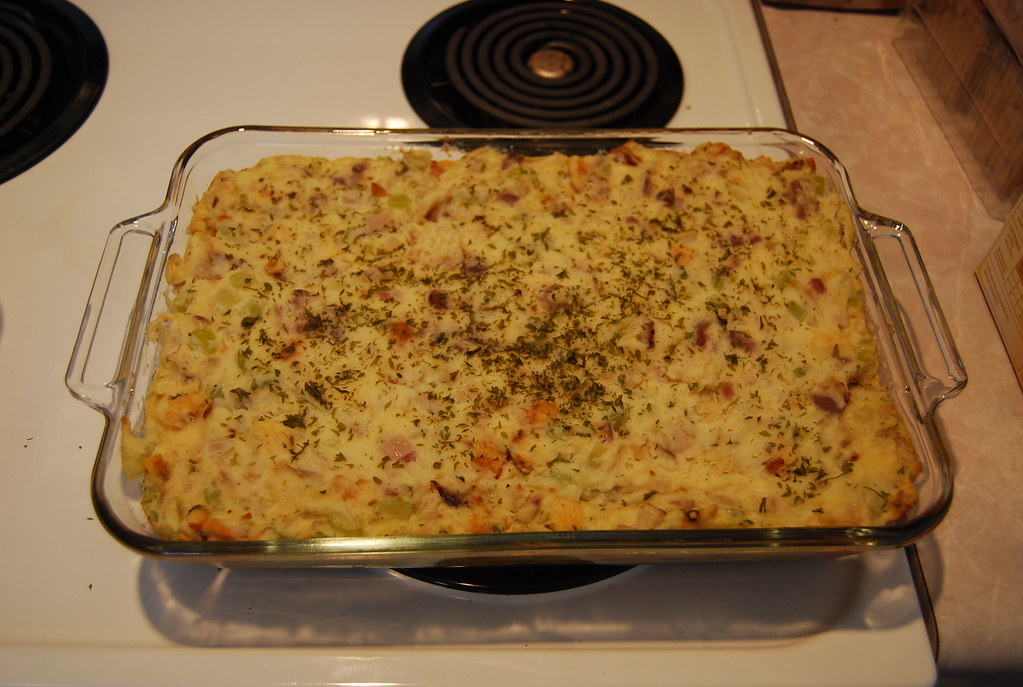
The mixture goes into a deep roasting pan (aluminum if you’re feeding fifty at the fire company, Pyrex if it’s just family) and bakes low and slow until the top forms a crust the color of a chestnut stallion. The edges caramelize. The center stays creamy. You know it’s done when the house smells like every good memory you have of November.
The Church-Supper Industrial Complex
No one makes a single pan of potato filling. That would be sinful.
At Good Food Inc. in Honey Brook, they cook it in 100-pound batches for fundraisers. The Mennonite women start Wednesday night, peeling potatoes by hand because the machine “bruises them.” By Saturday morning the basement social hall smells like heaven’s kitchen. Trays come out of the ovens in waves, each one scraped clean within minutes by people who drove an hour for the privilege.
St. Daniel’s Church in Robesonia sells it by the quart during their Lenten pierogi sales. Zion Lutheran in East Petersburg includes it with their ham-and-cheese loaves every fall. The Jonestown Fire Company serves it alongside chicken potpie thick enough to stand a spoon in. At every auction, every funeral lunch, every wedding rehearsal dinner in the Pennsylvania Dutch belt, potato filling is there, unassuming and unbeatable.
The Thanksgiving Civil War
In most American homes, the fight is dark meat versus white. In Pennsylvania, it’s filling versus mashed potatoes. Many households serve both, which is diplomatic but unnecessary. The correct answer is filling. Mashed potatoes are what you eat the other 364 days. Filling is what you wait all year for.
Some families go full heresy and stuff the turkey with it. The cavity steams the filling into something almost custard-like while the dripping fat bastes the top into lacquered perfection. Others bake it separately so vegetarians can have some (minus the turkey drippings, obviously). Both camps claim superiority. Both are right.
The Fastnacht Corollary
Every Shrove Tuesday, the same churches that make filling also fry fastnachts. The kitchens run on the same volunteer army of grandmothers who have been doing this since Eisenhower was president. The potato dough for fastnachts and the potatoes for filling often share the same 50-pound bags. Waste nothing, want nothing. That’s the Pennsylvania German creed, and it tastes like butter and love.
The Grocery-Store Heresy
Martin’s Famous Pastry Shoppe, the potato-roll people from Chambersburg, now sells frozen “Pennsylvania Dutch Potato Filling” in the grocery freezer case. It is… fine. It will do in a pinch if you’re exiled in Virginia or (God forbid) New Jersey. But it lacks the browned edges, the slight variation in texture, the knowledge that someone’s Aunt Gladys taste-tested it at 6 a.m. while wearing bedroom slippers and a housecoat. Convenience is the enemy of excellence.
The Next Generation Problem (and Solution)
The grandmothers are aging out. The church cookbooks are going digital. Young people think “air-fryer recipes” are normal. Yet something curious is happening. Twenty-something line cooks at Philadelphia’s neo-bistros are rediscovering filling. They plate it in perfect squares, torch the top, drizzle brown-butter powder, and charge $18. They call it “potato pavé with savory herbs.” The Mennonite grandmothers would laugh, then ask for seconds.
Meanwhile, the fire halls and churches still need volunteers. And every year, a new crop of thirty-somethings shows up to peel potatoes because their parents guilt-tripped them, or because they finally realized that if they don’t learn now, the recipe dies with Grandma. They complain about the early hours, then sneak thirds when no one is looking. The chain continues.
How to Make It When No Church Ladies Are Available
For the heathens who want to attempt it at home:
- 5 lbs russet potatoes, peeled and cut into chunks
- 1.5 lbs hearty white bread, cubed and lightly toasted
- 2 sticks unsalted butter (plus more because you’re not a coward)
- 2 large onions, finely diced
- 5 ribs celery, finely diced
- 1 bunch flat-leaf parsley, minced
- 2–3 Tbsp dried summer savory (rub it between your palms to wake it up)
- 6 eggs
- 2–3 cups whole milk, warmed
- Salt and pepper like you mean it
Boil and mash the potatoes with half the butter and some milk until fluffy. Sauté onions and celery in the rest of the butter until golden. Combine everything gently (use your hands; a spoon is for quitters). Add beaten eggs and enough warm milk so the mixture looks like extremely thick cake batter. Taste and adjust seasoning aggressively. Pack into a deep buttered pan. Bake at 350 °F for 60–90 minutes until the top is deep golden and the sides pull away.
Let it cool ten minutes before anyone dives in, or you’ll have third-degree mouth burns and no sympathy.
The Final Word
Potato filling does not travel well on Instagram. It photographs like tan wallpaper paste. It does not slice into pretty portions. It collapses when you try to plate it fancy. None of that matters. One bite and you understand why Pennsylvania fights to keep it alive. It is the taste of woodstoves and quilted tablecloths, of grandfathers in suspenders and grandmothers who never wrote anything down because “you’ll know when it’s right.” It is the dish that turns a table of strangers into family and a holiday into home.
Somewhere tonight, in a church basement in Womelsdorf or a farmhouse kitchen outside Lititz, another pan is sliding into the oven. The top will crackle. The edges will crisp. And Pennsylvania will keep its quiet crown.
Long live the filling.