



The Appalachian ridgeline cuts through eastern Pennsylvania like a natural highway, its ancient contours sculpted by millennia of geological forces. Along this ridge, in Berks and Schuylkill counties, stands a testament to one of conservation’s most significant victories—a place where the trajectory of wildlife protection in North America fundamentally changed course. Hawk Mountain Sanctuary represents more than just a refuge for raptors; it embodies a philosophical transformation in how humans perceive birds of prey and their essential role in healthy ecosystems.
The Dark Years Before Protection
September mornings in the 1920s and early 1930s brought something decidedly sinister to the rocky outcrops of what was then called Hawk Mountain. As autumn winds channeled migrating raptors along the ridge, gunshots echoed across the landscape. Shooters lined the rocks, treating the concentration of hawks, eagles, and falcons as little more than target practice. The carnage was systematic and celebrated. On a single weekend in 1932, observers documented the killing of nearly 600 raptors. Hawks were considered vermin, threats to game birds and poultry. The prevailing wisdom held that the only good hawk was a dead hawk.
This slaughter represented the mainstream thinking of the era. State bounties rewarded the killing of goshawks and great horned owls. Farmers nailed the carcasses of hawks to barn walls as both trophy and warning. The conservation movement, still in its infancy, focused primarily on game species and landscapes, not on predators that many viewed as competition or nuisance.
But the mountain’s geography made it a killing field of unparalleled efficiency. The Kittatinny Ridge creates what’s known as an updraft or thermal highway. As the sun warms the southern face of the ridge, rising air currents provide lift for migrating raptors traveling south for the winter. These birds, conserving energy for their long journey, ride these invisible elevators of warm air. The concentration of migrants at certain points along the ridge made them extraordinarily vulnerable.
A Visionary Sees Differently
Rosalie Edge was not your typical conservation activist of the 1930s. A New York socialite and suffragist, she had developed a reputation as a fierce advocate and skilled polemicist. Edge possessed the rare combination of passion, strategic thinking, and financial resources necessary to challenge entrenched interests. When she learned about the massacre occurring at Hawk Mountain, she didn’t wring her hands or write letters of concern. She acted with decisive urgency.
In 1934, Edge leased approximately 1,400 acres surrounding the primary shooting location. The following year, she purchased the property outright, establishing the Hawk Mountain Sanctuary Association. Her strategy was elegantly simple: remove the shooters and protect the birds. She hired a warden, Maurice Broun, whose job was to prevent killing and to document the migration scientifically. Where bullets had ruled, binoculars would now reign.
Edge’s action was revolutionary. Establishing a sanctuary specifically for birds of prey was unprecedented. Most existing refuges focused on waterfowl or other species valued by hunters. Predatory birds were largely considered unworthy of protection. Edge’s work at Hawk Mountain challenged fundamental assumptions about which lives mattered in conservation, pioneering the inclusive approach that characterizes modern environmental ethics.
The Science of Migration
The establishment of systematic observation at Hawk Mountain created an unexpected scientific treasure. Maurice Broun and his successors began meticulous daily counts of every raptor that passed the lookouts. This continuous dataset, now spanning nine decades, represents one of the longest running wildlife monitoring projects in existence. The numbers tell stories of seasonal rhythms, population trends, and environmental health that researchers could scarcely have imagined in the 1930s.
Sixteen species of raptors regularly migrate past Hawk Mountain. The sharp-shinned hawk, smallest of the accipiters, appears in the greatest numbers—sometimes thousands in a single day during peak migration in October. Red-tailed hawks, with their distinctive rust-colored tails, soar past in steady streams throughout autumn. The broad-winged hawk creates spectacular “kettles”—swirling columns of hundreds of birds riding thermals during their September passage.
But the rarer species generate the most excitement among the watchers who return year after year. Golden eagles, massive and powerful, typically appear in November, their dark forms distinctive against autumn skies. Bald eagles, once desperately endangered by DDT contamination, now pass in increasing numbers—a living testament to the effectiveness of environmental protection laws. Northern goshawks, fierce predators of northern forests, remain relatively uncommon but provoke particular enthusiasm when they appear.
The data collected at Hawk Mountain has proven invaluable for understanding raptor population dynamics. Scientists analyzing the trends have documented the catastrophic decline of peregrine falcons and other species during the DDT era of the 1950s and 1960s. The same datasets tracked the remarkable recovery following the pesticide’s ban. Declines in certain species serve as early warnings of environmental problems, as raptors, being apex predators, concentrate toxins and reflect ecosystem health.
The Experience of the Lookouts
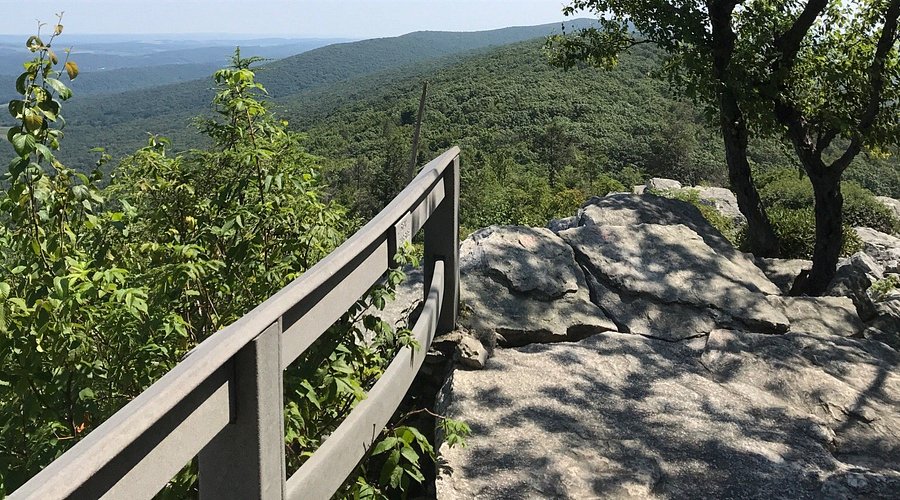
The North Lookout sits at 1,521 feet elevation, accessible via a steep, rocky trail that climbs through mountain laurel and oak forest. The forty-five-minute ascent demands reasonable fitness and sturdy footwear, but the reward justifies the effort. From the flat, exposed rocks at the summit, the vista extends for miles across the ridges and valleys of eastern Pennsylvania. On clear days, watchers can see approaching birds several miles away, identifying species by flight silhouette and behavior long before details become visible.
The culture of the lookouts reflects a peculiar blend of scientific rigor and democratic accessibility. Official counters from the sanctuary staff maintain the systematic tally, but anyone can participate. Regulars arrive before dawn during peak migration weeks, claiming favorite spots on the rocks, setting up spotting scopes and camp chairs. Thermos coffee gets shared. Sandwiches emerge from backpacks. Hours pass in companionable watching punctuated by sudden bursts of activity when birds appear.
The vernacular of the lookouts constitutes its own specialized language. “Sharp-shin at two o’clock, low” announces the sighting of a small accipiter. “Buteo” refers to the soaring hawks—red-tails, red-shoulders, broad-wings. “Possible harrier” indicates uncertainty about an identification, inviting others to weigh in with opinions. Heated but good-natured debates erupt over distant specks that might be large hawks or small eagles. The discussions reflect genuine expertise, as many regular visitors possess identification skills rivaling professional ornithologists.
The River of Rocks Trail offers an alternative experience. This unique geological feature consists of a boulder field stretching nearly a mile—a river of stone frozen in place, created by periglacial processes during the last ice age. Hiking through and over these massive rocks provides adventure and geological wonder, though raptor viewing from this location proves less predictable than at the main lookouts.
Expanding the Mission
Contemporary Hawk Mountain Sanctuary encompasses 2,600 acres and operates with a sophisticated mission extending far beyond the original goal of stopping the shooting. The organization conducts cutting-edge research on raptor ecology and migration. Scientists from the sanctuary have pioneered the use of various technologies to understand migration routes, including satellite telemetry that tracks individual birds across continents. These projects have revealed previously unknown connections between breeding grounds in the Arctic and wintering areas in South America, illuminating the truly global nature of raptor conservation.
Educational programming reaches tens of thousands of people annually. School groups arrive by the busload, students learning about ecology, adaptation, and conservation while experiencing the thrill of seeing wild raptors in flight. The sanctuary’s education center provides indoor space for programs when weather prohibits outdoor activities. Interactive exhibits explain raptor biology, migration strategies, and the history of the sanctuary itself.
The Acopian Center for Conservation Learning houses researchers and serves as a hub for scientific collaboration. Visiting scientists from around the world come to Hawk Mountain to share methodologies and findings, making the sanctuary a node in the global network of raptor research institutions. The center also hosts training programs for conservation professionals from developing nations, spreading expertise to regions where raptor populations face mounting threats.
Graduate students conduct thesis research at Hawk Mountain, contributing to knowledge while gaining field experience under the mentorship of sanctuary staff. Recent projects have investigated everything from the impacts of climate change on migration timing to the dietary ecology of wintering raptors in the surrounding landscape. This integration of professional research, education, and conservation management creates a model for how protected areas can serve multiple essential functions.
Seasonal Rhythms and Rare Visitors
Each season at Hawk Mountain offers distinct experiences and different species. Spring migration, though less concentrated than fall, brings raptors northbound from March through May. Broad-winged hawks, traveling to breeding territories across the eastern forests, pass in April. Ospreys, returning from Central and South America, appear as they head toward rivers and lakes where they’ll fish throughout summer. Spring also brings resident species into breeding activity—red-tailed hawks perform spectacular courtship flights, locking talons and spiraling through the air.
Summer at the sanctuary settles into a quieter rhythm. Most migrants have passed, but the trails offer excellent opportunities to observe forest ecology. Warblers and other songbirds fill the canopy with activity. Wildflowers bloom in succession along the trails. The interpretation shifts from migration spectacle to the subtler patterns of a healthy Appalachian forest ecosystem. Staff conduct research on breeding raptors in the surrounding region, monitoring nests and tracking reproductive success.
Autumn remains the sanctuary’s signature season. September brings the first major pulse—broad-winged hawks traveling in those remarkable kettles, sometimes numbering in the thousands. October delivers the peak of sharp-shinned hawk migration, along with Cooper’s hawks and American kestrels. November belongs to the buteos and eagles, as red-tails stream past and the occasional golden eagle generates excitement among the faithful watchers who brave the cold.
Winter transforms the sanctuary yet again. Deep snow can close the trails, but hardy visitors who make the trek may see species rarely observed during other seasons. Rough-legged hawks from the Arctic tundra winter in the region, occasionally perching along the ridgetop. Northern goshawks, already uncommon during migration, sometimes hunt the sanctuary’s forests in winter. Snowy owls appear irregularly during irruption years when populations boom in the north.
Rarities generate legendary status among the hawk-watching community. Black vultures, expanding their range northward, now appear regularly though they remain less common than turkey vultures. Mississippi kites, southern specialists, appear occasionally, far north of their normal range. Even more extraordinary visitors like swallow-tailed kites or white-tailed kites achieve near-mythical status in sanctuary lore, the subject of excited discussions and detailed trip reports.
The Community of Watchers
The social dimension of Hawk Mountain deserves recognition as one of its most valuable aspects. Serious birders travel from across North America and beyond to experience autumn migration from the famous lookouts. Many return year after year, establishing traditions and building relationships with fellow enthusiasts. The lookouts foster an informal mentoring culture where experts patiently help beginners learn identification skills and share knowledge about raptor biology.
This community transcends typical demographic boundaries. Retirees with decades of watching experience share rocks with college students discovering hawks for the first time. Families introduce children to the natural world through the accessible excitement of counting migrants. Photographers line up their lenses, capturing images that document both individual birds and the collective phenomenon of migration. The shared experience of waiting and watching creates bonds that persist beyond the mountain.
The sanctuary hosts special events throughout the year that strengthen this community. The Autumn Hawk Watch Festival in September combines guided walks, presentations by raptor researchers, and opportunities to handle education birds up close. Members’ meetings feature lectures by leading conservation scientists. Volunteer opportunities allow supporters to contribute directly to the sanctuary’s mission, whether by maintaining trails, assisting with educational programs, or helping with administrative tasks.
Social media and the internet have expanded the Hawk Mountain community globally. Daily migration counts posted online allow people anywhere to follow the season’s progress. Photographs and reports shared by visitors create a virtual experience for those unable to travel to Pennsylvania. Discussion forums bring together hawk enthusiasts to debate identification questions, share sighting reports, and exchange information about other raptor-watching locations.
Conservation Challenges and Climate Concerns
The long-term dataset from Hawk Mountain reveals troubling trends alongside success stories. While bald eagle numbers have rebounded dramatically and peregrine falcon populations have recovered substantially, other species show concerning declines. Sharp-shinned hawk counts have decreased significantly over recent decades, suggesting population problems that warrant investigation. American kestrel numbers have plummeted across much of North America, with Hawk Mountain data documenting this decline in stark numerical terms.
Climate change introduces new uncertainties into migration patterns that evolved over millennia. Warming temperatures affect prey populations, potentially disrupting the delicate timing between predator movements and food availability. Shifts in weather patterns may alter the formation of thermals and updrafts that migrating raptors depend upon. Earlier spring arrivals and later fall departures are already documented in the sanctuary’s data, but the long-term consequences of these shifts remain unclear.
Habitat loss continues to threaten raptors away from protected areas like Hawk Mountain. Development sprawl consumes forests and grasslands that provide hunting territories and nesting sites. Agricultural intensification reduces biodiversity, affecting the small mammals and birds that raptors prey upon. The sanctuary’s land protection efforts help maintain critical habitat corridors, but comprehensive conservation requires coordinated action across much larger landscapes.
Emerging threats like wind energy development present complex challenges. Renewable energy is essential for addressing climate change, yet wind turbines kill significant numbers of raptors, particularly eagles and other large soaring species. Hawk Mountain scientists contribute to research aimed at minimizing these conflicts through careful site selection and turbine design modifications. Balancing competing conservation priorities requires nuanced approaches that avoid simplistic solutions.
Legacy and Future Directions
Rosalie Edge’s bold action in 1934 created ripples that continue expanding. Hawk Mountain inspired the establishment of other raptor migration sites across North America. From Hawk Ridge in Minnesota to Cape May in New Jersey, from Golden Gate in California to Holiday Beach in Ontario, similar lookouts now monitor migrations and engage public support for conservation. The model of citizen science combined with professional research pioneered at Hawk Mountain has been replicated worldwide.
The philosophical impact may prove even more significant than the direct conservation outcomes. Hawk Mountain helped shift cultural attitudes toward predators, demonstrating that these species deserved protection and appreciation rather than persecution. This attitudinal transformation enabled policy changes like the Bald and Golden Eagle Protection Act and the Migratory Bird Treaty Act amendments that extended protection to raptors. The sanctuary served as tangible evidence that another relationship with predatory wildlife was possible.
Current strategic priorities focus on expanding research capacity while maintaining the accessible public experience that remains central to the sanctuary’s identity. Plans include enhanced monitoring technologies to better understand migration dynamics in the context of climate change. Collaborative projects with international partners aim to protect raptors throughout their annual cycles, recognizing that conservation cannot succeed by focusing only on migration stopover sites.
The sanctuary also works to diversify its community of supporters and visitors. Conservation succeeds when it reflects and includes all segments of society. Outreach programs target urban communities and underserved populations, working to ensure that the wonder of raptor migration becomes accessible to everyone, not just those with existing connections to the natural world. Scholarships and transportation support help schools with limited resources bring students to experience the mountain.
The Enduring Power of Place
Standing on the North Lookout on a crisp October morning, watching sharp-shinned hawks stream past in flight lines that seem endless, understanding comes without words. This place matters. The rocks beneath your feet absorbed the blood of massacred hawks nine decades ago, but now they support people from around the world who come to celebrate these birds. The transformation seems almost miraculous—from killing ground to sanctuary, from ignorance to understanding, from hostility to reverence.
The hawks themselves remain indifferent to human attitudes, following ancient instincts that guide them along this ridge as they have for thousands of years. They neither celebrate the protection nor remember the slaughter. They simply fly, seeking thermals, navigating by means we still incompletely understand toward destinations that suit their survival. Our relationship with them has changed completely while their essential nature persists unchanged.
Hawk Mountain Sanctuary reminds us that conservation successes are possible, that determined individuals can indeed change the world, and that protected places serve functions extending far beyond simple preservation. The sanctuary is simultaneously a research station, a classroom, a spiritual refuge, and a community gathering place. It demonstrates that conservation need not exclude people but can enrich human experience while protecting wildlife.
The daily count continues, adding another year of data to the longest-running study of raptor migration in existence. Visitors continue climbing the trail to the lookouts, carrying hopes of witnessing spectacular flights. Scientists continue analyzing patterns and trends, seeking to understand the complexities of migration ecology. And the hawks continue riding the ridge winds southward each autumn, living evidence that we can, sometimes, choose a better path—that we can decide to protect rather than destroy, to study rather than slaughter, to cherish the wild creatures with whom we share this planet.