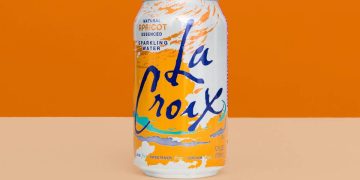




It’s a Tuesday morning on Baltimore Avenue, and someone is already cracking a can of La Croix Pamplemousse before they’ve even opened their laptop. This is not remarkable. In Philadelphia, the quiet percussion of that tab pull — that satisfying, pressurized hiss — has become something close to a morning ritual, a midday reflex, a late-night companion. The brand that started as a regional Midwestern curiosity, bottled near the St. Croix River in La Crosse, Wisconsin, has become a genuine fixture of Philadelphia life. You’ll find it stacked in cases in the produce aisle at Acme on East Girard Avenue. You’ll see it on the desks of marketing agencies in Fishtown. Bartenders in Rittenhouse pour it into spritz bases and zero-proof cocktails. Co-ops in South Philly stock it next to kombucha and locally sourced tonics. La Croix, in Philadelphia, is everywhere.
That’s a story worth telling properly.

What La Croix Actually Is (And Why It Matters That You Know)
Before we get deep into Philadelphia’s relationship with the brand, a quick primer, because the product’s identity is genuinely unusual.
La Croix was introduced in February 1980 by the G. Heileman Brewing Company of La Crosse, Wisconsin, as one of the first “Anti-Perrier” brands — deliberately meant to appeal to sparkling water consumers who were put off by Perrier’s snobby positioning. La Croix marketed itself as an “all occasion” beverage, and its name is pronounced like the St. Croix River that runs along Wisconsin’s western border.
There is something deeply American about that origin story. While European sparkling water brands built their identities around mineral springs, ancient geology, and a certain fussiness that made them feel aspirational, La Croix came out swinging against all of that. It was the beverage for people who didn’t want to be told what was sophisticated. It was Middle American and proud of it.
The company was acquired by National Beverage Corporation in 2002, and they ended up settling on a packaging design that was “least favored by management” but won over target consumers in a “landslide.” That bold, colorful, almost aggressively cheerful can design is now one of the most recognizable in any refrigerated aisle in America. Philly grocery shelves are no exception.
La Croix contains zero calories, zero sweeteners, and zero sodium. Each flavor comes from natural essence oils, which is a detail that matters to the health-conscious Philadelphians who scrutinize labels at every Whole Foods on Callowhill Street or at the South Philly Food Co-op on Passyunk.
How La Croix Took Over America — and What That Has to Do With Philly
The brand’s national explosion wasn’t a slow burn. It was a detonation.
When U.S. sugary-soda sales plummeted to a 30-year low in the spring of 2015, National Beverage took the opportunity to expand their consumer base by launching a social media marketing campaign targeting millennials. Sales exploded as the brand developed a national cult following.
Philadelphia, a city with a robust young professional class concentrated in neighborhoods like Fishtown, Northern Liberties, Graduate Hospital, and Spruce Hill, was prime territory for that kind of cultural contagion. The city’s identity has always been a mix of blue-collar pride and creative-class ambition — and La Croix, with its unpretentious price point and its oddly glamorous packaging, threaded that needle almost perfectly.
La Croix’s gaudy but resonating design captured the “casual sophistication” the design team was hoping for. The design of the 12-ounce can won a Gold Global Design Award for packaging in 2003. If you’ve ever seen a flat lay of a La Croix can next to a laptop and a succulent on someone’s Instagram, you understand the aesthetic shorthand it carries. It became a signifier of a certain kind of lifestyle: health-aware but not obsessive, fun but not reckless, budget-conscious but not trying to look it.
Philadelphia’s creative class latched on with both hands.
Where to Find La Croix in Philadelphia
South Philly: The Co-op and the Corner Store
South Philadelphia Provisions, the beloved community co-op at 1509 Mifflin Street, carries La Croix Pure as part of its curated wellness inventory. The co-op’s ethos — community ownership, health-forward stocking decisions, support for local and sustainable producers — sits perfectly alongside a brand whose credentials include being non-GMO verified, Whole30-approved, kosher, and vegetarian-friendly.
La Croix Pure Sparkling Water is calorie free, sweetener free, and sodium free, and is made from 100% recyclable cans. In a neighborhood where sourcing and sustainability matter, that list reads like a calling card.
A few blocks over, the independent corner markets of East Passyunk often stock La Croix right next to local craft sodas from Pennsylvania producers, a telling juxtaposition. The national brand has earned its place on the shelf next to the regional artisans, which is no small feat in a city with as much local pride as Philadelphia.
Rittenhouse Square: The Upscale Context
If you want to understand what La Croix becomes when it’s handed to a mixologist, head to the bar program at Lacroix at The Rittenhouse Hotel, 210 West Rittenhouse Square. Yes, the restaurant’s name is the same — and yes, the overlapping phonetics create a genuinely confusing situation for first-time Google searchers in Philadelphia.
Lacroix at The Rittenhouse has evolved into a more vibrant and relaxed destination, where indulgence meets approachability. The cocktail program, developed in partnership with James Beard Award-winning mixologist Danny Childs, includes zero-proof options like a Tarragon & Tonic and a Feint Punch that showcase housemade teas, shrubs, and seasonal flavors.
The zero-proof movement — and its relationship with high-quality sparkling water as a foundation — is something Lacroix (the restaurant) takes seriously. Sparkling water isn’t just a palate cleanser at this level of hospitality. It’s a building block for complex, layered drinks that deserve the same respect as their boozy counterparts. La Croix (the canned brand) occupies the democratic end of that same spectrum.
Fishtown and Northern Liberties: The Creative Hub Supply Chain
The strip of independent cafes running through Fishtown — particularly along Frankford Avenue between York Street and Girard Avenue — has made sparkling water a standard offering alongside espresso drinks and oat milk lattes. You’ll routinely spot La Croix in single-can cooler sections at spots like café-bars and neighborhood provisions shops up and down this corridor. It’s the drink of the person who’s on their third work call of the morning and needs something that isn’t coffee but still feels like a small treat.
At co-working spaces in Northern Liberties, particularly around 2nd Street and Germantown Avenue, La Croix cases are often the default fridge stocking for communal spaces. It satisfies everyone: the person doing Whole30, the person who just doesn’t like still water, the person who wants something to hold during a presentation that isn’t alcoholic but isn’t obviously boring either.
Graduate Hospital and Point Breeze: The Gym Bag Staple
Along South Street West and into the Point Breeze corridor, La Croix has found its footing in the post-workout, fitness-adjacent retail space. Independent gyms, yoga studios, and wellness boutiques from South Street down through Ellsworth often keep a cooler stocked with sparkling water. La Croix’s positioning — developed for health-conscious consumers, offering sparkle with zero calories, zero sweeteners, and zero sodium — makes it the obvious choice in those environments.
The Philadelphia Runner location on 1711 Spruce Street exemplifies the Philly fitness retail aesthetic: performance-focused but community-minded. Nearby cafes and juice bars serving the same customer base have made La Croix a de facto partner in the wellness routine.
La Croix, the Sober-Curious Movement, and Philadelphia’s Evolving Drinking Culture
Here is where the La Croix story in Philadelphia gets genuinely interesting, because the brand’s rise coincides almost perfectly with one of the most significant cultural shifts in the city’s bar and restaurant scene.
Nearly 1 in 2 American adults — 49% — were planning to drink less in 2025, up from 34% in 2023. The trend is led by younger adults: Gen Z at 65% and Millennials at 57%. Philadelphia, with its enormous university population and its well-documented food and beverage culture, has been at the forefront of this shift.
Philadelphia’s culinary scene has remained ahead of the curve on zero-proof offerings. Some of the city’s top chefs — many of whom are sober themselves — have been crafting zero-proof options for years, and as the sober-curious movement continues to gain momentum, the city’s bar and restaurant scene has responded with increasing creativity.
La Croix occupies a specific and valuable niche in this ecosystem. It’s not trying to be an alcohol substitute. It’s not a sophisticated mocktail with adaptogens and botanical syrups. It’s just good sparkling water — clean, reliably carbonated, available in flavors that are genuinely pleasant without being cloying. In a bar environment, it’s what you hand someone when they don’t want to drink and don’t want to make a big deal of not drinking. That social lubrication is undervalued.
At Wilder, 218 South 16th Street, the drinks list has made a serious commitment to zero-proof options. Owners Nicole Barrick and Brett Naylor are both sober, and they’ve crafted an N/A drinks list that runs the gamut from smoky lapsang souchong tea-forward cocktails to fruity, effervescent creations — all priced at $10. The building blocks for those drinks — sparkling water, quality citrus, housemade syrups — are the same DNA that makes La Croix work as a standalone drink.
At Bloomsday Restaurant & Wine Bar, 414 S. 2nd Street, sparkling water stirred with low-ABV vermouth creates one of the most approachable easy-drinking options on the menu, sitting alongside a spicy homemade ginger beer and a citrus-and-grenadine Cuddle on the Beach. The sparkling water backbone matters here. The quality of the bubbles and the neutrality of the base are what allow the other flavors to do their work.
Pamplemousse: Philadelphia’s Unofficial La Croix Flavor
Every city has its La Croix flavor. Philadelphia’s is Pamplemousse.
Pamplemousse — grapefruit — is widely considered one of the most popular La Croix flavors because of its balanced flavor profile. It’s not too strong, not too subtle, and the pastel pink and yellow packaging radiates a relaxed yet classy energy.
That description maps directly onto what Philadelphia aspires to as a city. This is not New York, with its relentless maximalism. It’s not D.C., all pressed shirts and strategic positioning. Philadelphia is a place that takes itself seriously without demanding that you do the same. Pamplemousse, with its assertive flavor that still manages not to be exhausting, is the canned water version of that civic personality.
Walk into any Giant at 4th and South or Trader Joe’s on East Chestnut Street and the Pamplemousse cases will be the ones with the beaten corners, pulled most frequently from the shelf. The data bears this out nationally: market research suggests La Croix holds a 30 percent market share in sparkling water sales in the United States, double that of its main competitor, Perrier, and the grapefruit variety has been the consistent driver of that dominance.
Other flavors earn their moment in Philadelphia’s rotating seasonal consciousness. Limoncello pops up at summer rooftop parties. Coconut makes its case at the beach-bar pop-ups that materialize along Delaware Avenue during the warmer months. Mango finds a natural home in the diverse food scenes of Kensington and Norris Square. But Pamplemousse is the constant.
La Croix as a Cocktail Mixer: Philadelphia Bartenders Weigh In
The brand’s positioning as a cocktail mixer has quietly grown into one of its most important roles in Philadelphia’s bar culture. La Croix’s marketing efforts have helped position it as a healthier alternative to sugary soda, as well as a mixer for popular cocktails.
In a city with a cocktail culture as rich and nationally recognized as Philadelphia’s, that matters. Philly bartenders — at places like Bolo, 2025 Sansom Street, and the Good King Tavern, 614 S. 7th Street — have integrated sparkling water into their recipes in ways that show a real respect for the ingredient rather than treating it as an afterthought.
The Marseille Afternoon at the Good King Tavern has become synonymous with the bistro since it opened in 2013: Pastis, orgeat, lime, and sparkling water — a cocktail that owner Chloe Grigri considers “very Provençal,” inspired by the classic Mauresque of southern France. Swap the sparkling water component out for La Croix Pure and you lose essentially nothing while gaining the consistency that comes from a standardized product. Home bartenders across the city have discovered this calculus on their own.
The practicality is real. La Croix Pure provides neutral carbonation that won’t fight with delicate botanicals or shrubs. The flavored varieties — particularly Limoncello, Tangerine, and Coconut — add aromatic complexity to simple spirit-and-soda builds without requiring simple syrup, which keeps the calorie count down for the calorie-conscious Philly crowd. It’s a pantry staple for the home bartender in a way that no other sparkling water brand has quite achieved.
The Sustainability Argument (Which Philly Takes Seriously)
Philadelphia has a complicated relationship with sustainability. The city has made genuine strides — the Philadelphia Water Department runs one of the most award-winning water systems in the country, which creates an irony when people buy canned sparkling water in enormous quantities. But the conversation around packaging, recyclability, and brand ethics is one that Philadelphia consumers engage with seriously.
La Croix cans are sustainable and recyclable, and are produced without a BPA liner. All La Croix flavors are derived from natural essences, which give each flavor its unique aroma, taste, and sensory experience.
That BPA-free, fully recyclable aluminum positioning is significant in a city where the Philadelphia Recycling Office and neighborhood sustainability advocacy groups have spent years pushing for more responsible consumer choices. The aluminum can — when it’s actually recycled — has a far better environmental profile than plastic bottles. Philadelphia’s recycling infrastructure, while imperfect, does process aluminum effectively, which gives the La Croix case purchase a defensible ecological rationale.
The brand’s non-GMO Project Verification and Whole30 approval add further layers for the certification-oriented Philly consumer. These aren’t meaningless badges in this city. At the Weavers Way Co-op locations in Chestnut Hill (8424 Germantown Avenue) and Mt. Airy (559 Carpenter Lane), shoppers read labels the way other people read menus at tasting restaurants. La Croix’s clean credential list — zero calories, zero sweeteners, zero sodium, non-GMO, kosher, gluten-free — clears every bar.
The Philadelphia Office: La Croix in the Workplace
It would be dishonest to write about La Croix in Philadelphia without acknowledging its corporate and professional context. The brand became, at some point around 2016 and 2017, the unofficial beverage of the open-plan office.
Philadelphia’s growing tech, design, and consulting sector — concentrated in the Navy Yard, in University City, and along the Market Street corridor — adopted La Croix as a workplace staple with remarkable speed. It replaced diet soda on the beverage list of dozens of startups and creative agencies. It became the drink of the afternoon slump, the 3 p.m. mental refresh, the thing you crack open when you need to signal to yourself that the workday isn’t quite over but the coffee phase definitely is.
The Comcast Technology Center at 1800 Arch Street and the surrounding cluster of Center City offices have made bulk La Croix orders a standard line item in facilities budgets. The brand’s ability to satisfy an enormous range of dietary preferences simultaneously — it works for the keto person, the pregnant colleague, the alcohol-abstainer, the caffeine-avoider, the person who just wants bubbles — makes it the safest possible communal beverage choice. It offends no one.
LaCroix the Restaurant vs. La Croix the Water: A Necessary Disambiguation
No conversation about La Croix in Philadelphia is complete without addressing the naming situation directly.
Lacroix at The Rittenhouse Hotel, 210 West Rittenhouse Square, is one of the city’s most storied fine dining destinations. It has been a beloved fixture on Rittenhouse Square for over two decades, evolving into a modern expression of refined dining where French bistro influence meets global flavors and the cocktail program is as considered as the cuisine.
This means that a Google search for “La Croix Philadelphia” will, depending on the day and the algorithm’s current preferences, return results for either a canned sparkling water’s local retail footprint or a Michelin-recognized fine dining restaurant with a $125 Sunday brunch. The collision is delightful in a specifically Philadelphia way. Only here would the city’s most famous sparkling water happen to share its name with one of its most acclaimed restaurant dining rooms.
The restaurant’s cocktail program, developed with James Beard Award-winning mixologist Danny Childs, is in many ways the elevated cousin of what La Croix the brand stands for at the consumer level. Both are built around the pleasure of effervescence. Both are committed to flavor that earns its place rather than overwhelming the palate. Both have managed to be simultaneously accessible and aspirational — a difficult and rare achievement in the food and beverage world.
What La Croix Says About Philadelphia Right Now
In 2026, Philadelphia is a city in serious culinary motion. The sober-curious movement has taken genuine root. Innovation is driving functional beverages that balance natural ingredients, reduced sugar, and vibrant tropical or fruity profiles, with brands creating mindful, elevated experiences that satisfy both taste and lifestyle simultaneously. Against this backdrop, La Croix occupies a specific and irreplaceable position.
It is not a status drink. It is not a craft product. It is not locally produced or micro-batched or curated in any meaningful sense. But it is reliably good at what it does — delivering clean carbonation, honest flavor, and a small sensory pleasure — in a package that costs about a dollar a can and fits in a bike bag, a desk drawer, a diaper bag, or a rooftop cooler with equal ease.
Philadelphia has always had an appreciation for things that work without making a fuss about it. The cheesesteak is not a complicated dish. The Citywide Special is not a sophisticated cocktail order. The Reading Terminal Market at 12th and Arch Streets is not trying to be the Ferry Building in San Francisco. And La Croix is not trying to be Pellegrino. It’s trying to be the best version of what it is, in a can with a pastel flamingo on it, and in this city, that kind of unpretentious excellence has always been understood.
You’ll find La Croix at every Wawa on every block in Center City. You’ll find it at the Di Bruno Bros. at 930 South 9th Street in the Italian Market, nestled between imported Italian sodas and local craft beverages. You’ll find it in the green room of every venue on the Broad Street concert corridor, in the fridges of Fishtown house parties, in the canvas tote bags of people walking to the farmers’ market at Clark Park in West Philadelphia (43rd and Baltimore Avenue) on a Saturday morning.
Traditional soft drinks, sparkling water, and tea remain the most common alcohol substitutes, largely due to their accessibility and perceived value. That finding, dry and statistical as it is, describes something true and human about why La Croix has worked so well in a city like Philadelphia. Accessibility and perceived value are not small things. They are, in fact, the exact qualities this city runs on.
Bottom Line
La Croix in Philadelphia is not a trend. It has outlasted its trend phase by several years and settled into something more durable: a daily staple, a reliable pleasure, a democratically priced constant in a city that changes fast and values consistency.
From the aisles of South Philly Provisions on Mifflin Street to the bar program at Lacroix on Rittenhouse Square, from the office kitchens of University City to the rooftop coolers of Bok Bar at 800 Mifflin Street, the familiar can has made itself at home in every corner of this city. It has done this without fanfare, without a local origin story, and without any particular effort to court Philadelphia specifically.
That, more than anything, might be the most Philadelphia thing about it. The city didn’t need to be courted. It just found what it liked and made it its own.
For the latest La Croix flavor availability in Philadelphia, check the store locator at lacroixwater.com. Lacroix restaurant reservations can be made through OpenTable or directly at lacroixrestaurant.com.


